Industry related headlines to keep you in the know.
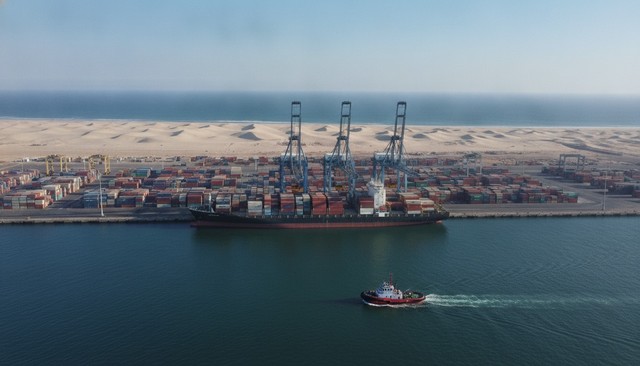
Namibia's opposition has asked the works and transport minister to table the full detail of every active, awarded and pending concession at the ports of Walvis Bay and Lüderitz — concession periods, lease fees, targeted cargo volumes and the names of the private concessionaires. A ministerial response is expected this week.
POLITICS INSIGHT
20 September 2026 • 5 min read
The question that matters commercially is buried in the last line of the request: how does Namport monitor its concessionaires, and how does it protect local logistics companies from excessive tariffs? That is a question about the price of using the port — and it has not yet been answered.
Independent Patriots for Change shadow minister of works and transport Nelson Kalangula has put a set of questions to works and transport minister Veikko Nekundi about long-term concessions at Namibia's ports, raising concerns over the Namibian Ports Authority's future revenue, its operations and the protection of local jobs. He is asking for details of all active, awarded and pending concessions at Walvis Bay and Lüderitz, including private concessionaires, concession periods, lease fees and targeted cargo volumes.
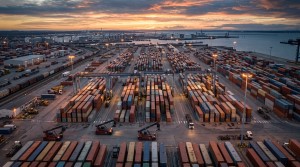
The questions follow the award of a 25-year concession to Terminal Investment Namibia, a subsidiary of MSC, to operate container-handling services at Walvis Bay's new container terminal. Kalangula also wants detail on job-retention guarantees, local-content requirements and protection against retrenchments or downgraded employment contracts under that agreement. Nekundi is expected to respond next week.
The specific ask: Which revenue-generating and marine services remain under Namport's direct management — tugboat operations, pilotage, dredging and bulk-liquid handling — and how will concession fees contribute towards Namport's capital debt while still allowing sustainable dividends to the state? (Source: The Namibian, 2026)
For transporters and forwarders, a concession is not an abstract governance matter. It determines who sets the terminal handling charge, who owns the booking system, who decides the gate hours and who a customer complains to when a box sits too long. Where the port authority retains marine services but a private operator runs the container terminal, the cost stack a Namibian or Zambian shipper pays is split between two parties with different commercial incentives — and the visibility of that split matters.
Walvis Bay's whole proposition to the region has been that it is the reliable, competitively priced alternative for landlocked Botswana, Zambia and the DRC. That proposition is built as much on predictable tariffs as on transit time. A parliamentary request for published concession periods, lease fees and volume targets is, in commercial terms, a request for the inputs that determine whether that pricing promise holds for 25 years.
It is worth being precise about the status of this story. These are questions, not findings. No allegation of wrongdoing has been made, no concession has been suspended, and nothing in the request changes the terms of any existing agreement. What it does is create a dated, on-the-record moment at which the terms of Namibia's port concessions may be placed in the public domain — something operators have not previously had in consolidated form.
The more durable issue sits behind the questions. Every SADC port pursuing private terminal operators — Walvis Bay, Durban, Nacala, Dar es Salaam, Maputo — faces the same structural tension between the capital a concessionaire brings and the pricing power a long concession confers. Regulatory monitoring is the mechanism that is supposed to hold those two in balance, and it is precisely the mechanism the opposition is asking to see described.
Watch for the ministerial reply this week: if concession periods, fee structures and volume targets are tabled, that is the first consolidated public picture of what using Walvis Bay will cost over the next two decades. Operators quoting multi-year corridor rates through Walvis Bay should build tariff-review clauses into contracts rather than assuming today's terminal charges hold for the life of the concession.
Stay connected with Southern Africa's freight and transport community.
Join 6,400+ logistics professionals across the SADC region.
Visit Laaimylorrie.com| About the Author | |

|
Andre Klynsmith Entrepreneur & Technology Enthusiast Andre's expertise spans technology, blockchain, transport, and logistics — with a passion for innovation and driving positive change across industries. |
| Source: The Namibian View source › | 18 September 2026 |


Subscribe to our Newsletter and stay in the know with all the latest Industry News, Products and Trends covering the whole of the SADC region.
KS Blockchain T/A Laaimylorrie.com . All Rights Reserved.