Industry related headlines to keep you in the know.
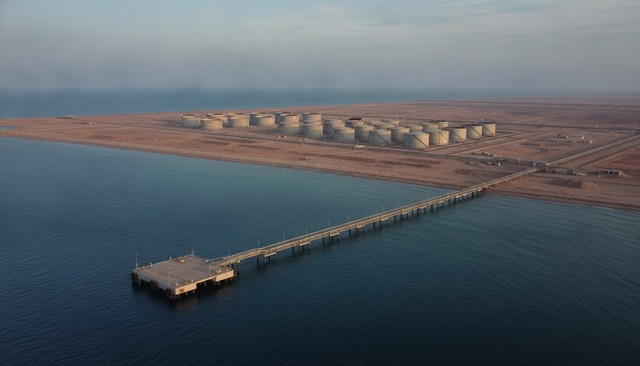
Drone strikes on Friday knocked out the 1 200-kilometre east-west pipeline across the Arabian Peninsula, the main route by which Middle East oil has been reaching world markets without passing through the Strait of Hormuz.
Politics Insight
15 September 2026 • 3 min read
Traders and Saudi buyers told Reuters that Riyadh holds enough oil at its Red Sea port of Yanbu to keep exports running for only five to seven days if the line stays shut. After that, as much as 4% of global oil supply is at risk — on top of the barrels already lost to the disruption at Hormuz.
Throughout this crisis, the standard reassurance has been that Gulf oil has an overland escape route: pump it west across Saudi Arabia to Yanbu on the Red Sea and load it there, avoiding the strait entirely. That is the line that was hit. Saudi Arabia has not given full details of the damage or said how long repairs will take, and sources have offered Reuters estimates ranging from days to weeks. Satellite images showed large columns of smoke at points along the route.
On the same day, Yemen's Houthis captured Perim Island in the middle of the Bab el-Mandeb, the strait controlling the mouth of the Red Sea. The significance is uncomfortable: the bypass route ends at a Red Sea port whose southern exit is now contested. Oil prices moved above $100 last week for the first time since July, and the retail price of diesel in the United States reached another record above $6.20 a gallon on Sunday.
Five to seven days of cover: Yanbu stocks can sustain Saudi exports for five to seven days if the 1 200 km pipeline stays shut, after which up to 4% of global oil supply is exposed. (Source: Reuters via gCaptain, 2026)
A meeting between Iranian officials and Gulf Arab states, scheduled for Monday in Oman, was called off. Iran had said it would present an agreement reached with Muscat governing future shipping routes through the strait. Oman's foreign minister said late on Sunday that the meeting had been postponed in the interests of consensus, while Iranian state media reported that the delay came at the request of some regional countries. Iraq had planned to send a delegation and Saudi Arabia and Qatar were to be represented by their foreign ministers; Bahrain had said it would not meet any Iranians.
Even before the postponement, expectations were low. A senior Iranian official had told Reuters the meeting was unlikely to produce a signed agreement to reopen the strait, and Iran's foreign minister said publicly that Tehran would not reopen Hormuz until the United States meets its demands. No peace talks have been held since an interim agreement collapsed in June, and shipping continues to absorb the consequences: UKMTO reported a vessel struck by a projectile in the strait on Sunday, causing a fire and forcing the crew to evacuate.
Most SADC economies are price takers on refined product. Namibia imports effectively all of its diesel and petrol, and South Africa's refining capacity covers only part of domestic demand, with the balance landed as finished product at coastal terminals. When a bypass route closes and the alternative chokepoint is contested, the effect reaches Walvis Bay and Durban as a landed cost and a lead time, not as a headline.
The practical read is about timing. Regional fuel prices are set on a lag, so the crude and product moves of the past week will show up in pump and bunker prices weeks after the news cycle has moved on. Operators who are still costing loads on last month's diesel price are quoting into a market that has already changed.
Shorten your quote validity periods on long-haul work until the pipeline repair timeline is known, and make sure every rate you put out has a dated expiry on it. Check that your fuel adjustment clause triggers on a published index rather than on a conversation. And if you hold fuel stock, decide your reorder point now rather than reacting to the first price notice — a five-to-seven-day export cushion at the other end of the chain is not much warning.
Stay connected with Southern Africa's freight and transport community.
Join 6,400+ logistics professionals across the SADC region.
Visit Laaimylorrie.com| About the Author | |

|
Andre Klynsmith Entrepreneur & Technology Enthusiast Andre's expertise spans technology, blockchain, transport, and logistics — with a passion for innovation and driving positive change across industries. |
| Source: gCaptain (Reuters) View source › | 14 September 2026 |


Subscribe to our Newsletter and stay in the know with all the latest Industry News, Products and Trends covering the whole of the SADC region.
KS Blockchain T/A Laaimylorrie.com . All Rights Reserved.