Industry related headlines to keep you in the know.
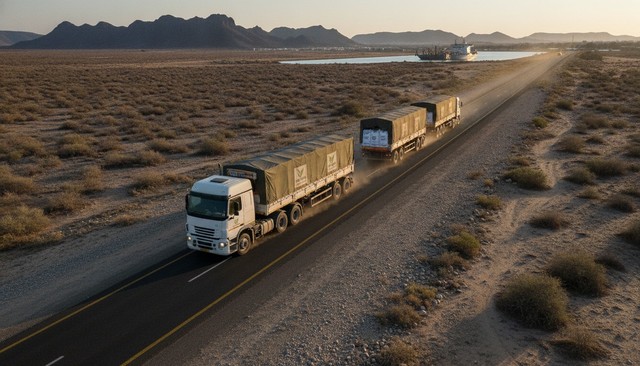
Cargo volumes along the Walvis Bay-Ndola-Lubumbashi Development Corridor rose significantly in the second quarter of 2026 after a flat first quarter, and the Walvis Bay Corridor Group says importers and exporters are actively rerouting through Walvis Bay for its transit reliability. For transporters, this is the clearest signal yet that corridor choice in western SADC is now being made on performance rather than habit.
TRANSPORTATION
14 September 2026 • 4 min read
Fertiliser, sulphur, ammonium nitrate, wheat, solar equipment and mining inputs northbound; copper southbound. The WBNL corridor's growth is not a single commodity story, and that balance of flows is what makes a route commercially viable for a transporter rather than merely available.
James Kaposa, business development manager for Zambia and Malawi at the Walvis Bay Corridor Group, attributes the second-quarter increase to higher import volumes of fertiliser, sulphur, ammonium nitrate, wheat, solar equipment and mining inputs. Importers and exporters were rerouting cargo through the Port of Walvis Bay because of what he described as its operational efficiency, reliability and competitive transit times.
Mining remains the anchor. Increased production at Kansanshi, Lumwana, Mopani and Konkola Copper Mines pushed more copper through Walvis Bay, with Zambian annual copper production rising 6.8%, from 802,000 tonnes in 2024 to 856,000 tonnes in 2025. Development of the Mingomba copper mine is expected to add further export volume in support of Zambia's target of three million tonnes a year by 2030.
Corridor driver: Zambian copper production rose 6.8%, from 802,000 tonnes in 2024 to 856,000 tonnes in 2025, feeding higher export volumes through Walvis Bay. (Source: Walvis Bay Corridor Group, via Freight News, 2026)
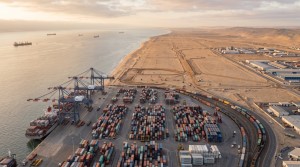
At the coast, the Port of Walvis Bay's 10-kilometre access channel is being deepened from 14.4 metres to 16.8 metres and widened from 130 metres to 200 metres. That is not a cosmetic upgrade: it determines which vessel classes can call, and vessel class determines whether a route can carry direct services rather than feeder transhipment. Kaposa said the work had significantly enhanced the port's ability to accommodate larger vessels and growing volumes.
Inland, construction of the Lusaka-Copperbelt dual carriageway is under way and rehabilitation of the Livingstone-Sesheke road is planned. Both target the road segments where transit variability, not distance, is the problem. A corridor is only as good as its slowest section, and for the WBNL route those Zambian legs have historically been where schedules unravelled.
New non-mining cargo is emerging. Pilot avocado exports to Europe have moved via Walvis Bay, and a major fertiliser manufacturing plant has been commissioned, creating opportunities in both directions. Kaposa framed this as strengthening northbound and southbound trade along the corridor -- which is precisely the condition that removes empty running from a transporter's cost model.
A mining-only corridor forces operators to price one-way loads and absorb the return leg. A corridor carrying fertiliser and agricultural inputs north and copper and perishables south supports round-trip pricing, which is materially cheaper per kilometre and far more defensible when a customer starts comparing quotes against the Durban or Dar es Salaam routes.
If you run Zambian or Congolese work and have not costed a WBNL round trip in the last twelve months, your comparison is out of date. Test the route on your own data -- actual transit time and actual border dwell, not published figures -- and look specifically for backhaul pairings between fertiliser and mining inputs northbound and copper or perishables southbound, because that pairing is where the margin sits.
Stay connected with Southern Africa's freight and transport community.
Join 6,400+ logistics professionals across the SADC region.
Visit Laaimylorrie.com| About the Author | |

|
Andre Klynsmith Entrepreneur & Technology Enthusiast Andre's expertise spans technology, blockchain, transport, and logistics -- with a passion for innovation and driving positive change across industries. |
| Source: Freight News View source › | 3 September 2026 |





Subscribe to our Newsletter and stay in the know with all the latest Industry News, Products and Trends covering the whole of the SADC region.
KS Blockchain T/A Laaimylorrie.com . All Rights Reserved.