Industry related headlines to keep you in the know.
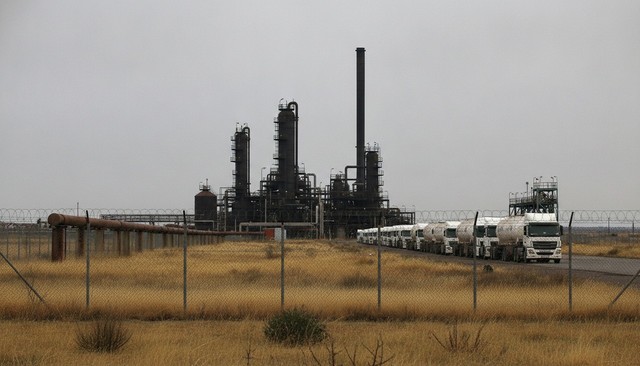
Natref normally supplies about 70% of the jet fuel burned at OR Tambo International Airport. With the refinery offline, that share has to arrive by import instead, and Airports Company South Africa says a stakeholder mitigation plan is holding the position for now. The episode is a clean illustration of a risk that sits quietly inside most SADC fuel supply chains: single-source concentration.
BUSINESS INSIGHTS
14 September 2026 • 4 min read
A single refinery goes down and 70% of an airport's fuel has to be found on the water instead. In a normal market that is an inconvenience. In a market where Middle East conflict has already tightened refined product supply and pushed landed costs up, it is a test of whether the contingency plan was ever real.
Airports Company South Africa acting chief executive Charles Shilowa told Freight News during the company's 2025/26 annual financial results announcement on 9 September that ORTIA is not currently at risk of a fuel supply disruption. A plan built with input from all relevant stakeholders indicates there should be no challenges until the refinery is back on stream, he said, and stakeholders will keep meeting to monitor whether projected supplies arrive as expected.
The industry's formal mitigation proposal was submitted to Transport Minister Barbara Creecy, the Department of Transport confirmed. Two things in that sentence matter for anyone running a fuel-dependent operation: the plan is a projection of arriving cargoes rather than fuel already in tank, and it required coordination at ministerial level to assemble.
Concentration in one number: Natref normally supplies about 70% of ORTIA's jet fuel demand, with imports required to cover the shortfall while the refinery remains offline. (Source: ACSA, via Freight News, 2026)
Jet fuel is the visible case because an airport is a single, measurable demand point. The underlying structure is identical across the region's diesel supply. Southern Africa's refining capacity has shrunk over the past decade, import dependence has risen correspondingly, and the same refineries, pipelines, coastal depots and inland terminals serve aviation, road freight, mining and agriculture at once.
That means the risk is correlated rather than diversified. A transporter with three fuel suppliers may feel hedged, but if all three draw from the same inland terminal fed by the same refinery or the same import berth, there is one point of failure wearing three brand names. The useful question is not how many suppliers you have on the account, but how many independent physical sources sit behind them.
Replacing domestic refinery output with imports is straightforward when the international product market is loose. It is considerably less so in 2026, with refined product markets tight and freight and insurance costs on Gulf-linked cargoes elevated. An import-based contingency plan priced in a calm market may not clear at the same cost or the same speed in a disrupted one.
The forward-looking part of the same ACSA announcement is worth noting alongside it. The company is targeting cargo throughput of 1.2 million tonnes by 2029/30, supported by a planned Midfield Cargo Terminal adding 750,000 tonnes of capacity for pharmaceuticals, e-commerce, aerospace components, perishables, diamonds, metals and automotive cargo. Building that volume assumes fuel supply to the same node stays dependable.
Map your diesel supply back past the invoice to the physical source -- which terminal, fed by which refinery or import berth -- and count the genuinely independent sources, not the supplier names. Ask your suppliers what their contingency is if their primary source goes offline, and get the answer in writing before you need it. If you hold bulk tankage, treat days of cover as an operational metric that gets reported, not a number someone checks after a disruption starts.
Stay connected with Southern Africa's freight and transport community.
Join 6,400+ logistics professionals across the SADC region.
Visit Laaimylorrie.com| About the Author | |

|
Andre Klynsmith Entrepreneur & Technology Enthusiast Andre's expertise spans technology, blockchain, transport, and logistics -- with a passion for innovation and driving positive change across industries. |
| Source: Freight News View source › | 10 September 2026 |




Subscribe to our Newsletter and stay in the know with all the latest Industry News, Products and Trends covering the whole of the SADC region.
KS Blockchain T/A Laaimylorrie.com . All Rights Reserved.