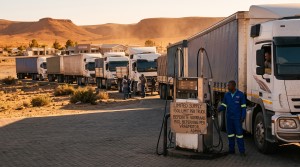
Industry related headlines to keep you in the know.
When the Strait of Hormuz shut, alternative suppliers stepped up for 10 of the 12 strategic products the International Trade Centre tracked. They fully replaced the lost volume for exactly two of them.
Supply Chain Management
14 September 2026 • 5 min read
Most SADC procurement files list a second supplier for critical inputs. The Hormuz data is the first large-scale natural experiment in whether those second suppliers can actually deliver the tonnes when the first one stops — and the answer, for most products, is only partly.
Analysis published by the International Trade Centre — the agency jointly mandated by the World Trade Organization and UNCTAD — and reported by UN News examined 12 strategically important energy, fertiliser and industrial products for which the Hormuz-dependent economies of Bahrain, Iran, Iraq, Kuwait, Qatar, Saudi Arabia and the United Arab Emirates are major global suppliers.
Comparing April 2026 with April 2025, combined export volumes across all 12 products fell 54%. Liquefied natural gas recorded the steepest contraction at 95%, followed by urea at 83%, methanol at 80% and ammonia at 75%. Polymers of propylene, used for plastic packaging, were the least affected at 24%. The largest absolute losses were in crude petroleum, down 28 million tonnes, followed by refined petroleum oils at 7.3 million tonnes and LNG at 5.5 million tonnes.
Substitution result: Alternative suppliers increased shipments for 10 of the 12 products tracked, but those gains fully offset the lost Hormuz volume for only two — ammonia and polymers of propylene. (Source: International Trade Centre, via UN News, 2026)
That two-of-twelve figure is the finding worth carrying into a procurement review. Ten alternative supply routes activated, which means the commercial relationships, the logistics and the willingness were all in place. Only two of them had genuine spare capacity to sell. For the other eight, the substitute supplier existed on paper, responded to the crisis, and still could not close the gap in tonnes.
The ITC noted that the shortfall was absorbed in other ways: buyers drew on inventories and strategic reserves, increased domestic production where that was possible, or simply consumed less. None of those three is a supply chain strategy for a small importing economy. Southern African buyers hold thin inventories by international standards, have limited domestic production of refined fuels and petrochemicals, and cannot reduce consumption of fertiliser or diesel without a direct hit to the harvest or to freight capacity.
The importer-side numbers show why the same shock produces very different outcomes. Japan, which historically sourced 91% of its crude petroleum imports from Hormuz-dependent economies, recorded a 64% decline in total crude imports in April. Thailand, by contrast, recorded a 62% increase as its refiners moved early to secure additional cargoes from alternative suppliers. Same disruption, opposite result — the difference being pre-existing concentration and the speed of the response.
Across the wider basket, the ITC's authors observed that sizeable falls in fertilisers, chemicals, plastics and aluminium showed the disruption reaching a far broader range of industries and supply chains than the energy headlines suggested. For a SADC manufacturer or distributor, that is the practical warning: the exposure is rarely where you last checked for it. Packaging resin, industrial chemicals and aluminium sit two or three tiers down a bill of materials, and nobody in the business owns the risk.
Test your backup suppliers on volume, not on existence: ask each one, in writing, what additional monthly tonnage they could actually ship to your discharge port at 30 days' notice, and treat any answer that is not a number as no backup at all. Map your exposure two tiers deep, because packaging, chemicals and aluminium carry the same chokepoint risk as fuel without appearing on the fuel line. And where a substitute exists but is smaller, plan the shortfall now — partial substitution needs a rationing rule agreed with customers before the shortage, not during it.
Stay connected with Southern Africa's freight and transport community.
Join 6,400+ logistics professionals across the SADC region.
Visit Laaimylorrie.com| About the Author | |

|
Andre Klynsmith Entrepreneur & Technology Enthusiast Andre's expertise spans technology, blockchain, transport, and logistics — with a passion for innovation and driving positive change across industries. |
| Source: UN News — Strait of Hormuz disruption hits energy, fertilizer and industrial trade (International Trade Centre analysis) View source › | 4 August 2026 |


Subscribe to our Newsletter and stay in the know with all the latest Industry News, Products and Trends covering the whole of the SADC region.
KS Blockchain T/A Laaimylorrie.com . All Rights Reserved.