Industry related headlines to keep you in the know.
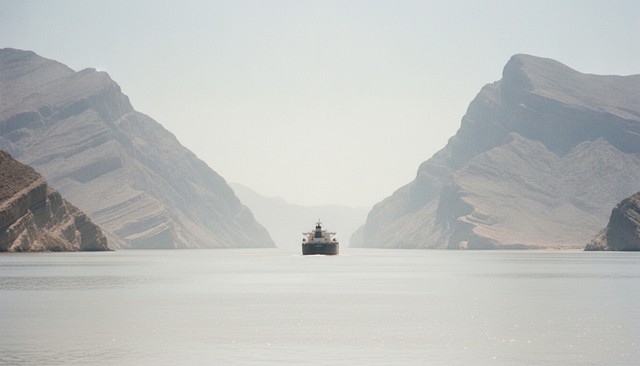
Washington says roughly 40 commercial ships carrying some 18 million barrels of oil crossed the Strait of Hormuz under naval escort on a single day. Independent ship-tracking firms recorded six vessels that week, with a ten-day average of 13. Both figures are being published as fact.
Politics Insight
14 September 2026 • 5 min read
Southern African importers do not get to choose whether Hormuz reopens. They do get to choose which number they build their plan on — and this year that choice is doing more work than most procurement teams realise.
Reporting by Al Jazeera on 3 September 2026 set the competing claims side by side. Two US officials told CNN that 40 commercial ships carrying some 18 million barrels transited under US military escort in a single day, described as a wartime record. President Trump had put the figure at around 30 ships a night, and Treasury Secretary Scott Bessent said at least 10 million barrels were getting through daily, with 15 to 17 million on one day.
The tracking data tells a different story. Marine analytics firm Kpler recorded six vessels crossing on the Wednesday, 11 on the Tuesday and five on the Monday, putting the ten-day average at 13 vessels per day. Lloyd's List Intelligence recorded around 12 transits per day from 26 August to 1 September, and about 14 non-Iranian-linked ships a day from 17 to 23 August. PortWatch puts the overall average since March at seven vessels. Before the war, roughly 100 ships and 20 million barrels passed daily.
The gap: A claimed 40 escorted transits on one day against a Kpler ten-day average of 13 vessels per day and a PortWatch average of seven since March — measured against a pre-war baseline of about 100 ships daily. (Source: Al Jazeera, citing Kpler, Lloyd's List Intelligence and PortWatch, 2026)
Bridget Diakun, maritime intelligence and research director at Lloyd's List Intelligence, told Al Jazeera it was hard to explain the divergence without knowing how the US tallies its own figures, noting that Lloyd's counts only cargo-carrying vessels above 10,000 deadweight tonnes. Eirik Hooper of maritime consultancy Drewry made the same point more bluntly: a US operational count plausibly includes everything that moved under or near naval protection — naval auxiliaries, offshore support craft, tugs, coastal vessels and dhows — while commercial trackers filter those out on size or cargo grounds.
There is a second, harder problem. Hooper noted that by late August the majority of Hormuz crossings were classified as dark or unknown by route, with confirmed movements often backdated as vessels that had switched off their transponders were later identified. That means the commercial numbers are themselves provisional. The Joint Maritime Information Center, in a 1 September advisory, described commercial traffic as far below baseline despite a modest uptick, and kept the risk level at severe, citing continued risk from drifting or uncharted mines.
SADC economies buy refined fuel, base chemicals, fertiliser feedstock and lubricants from Gulf and Indian refineries. Whether that flow is running at 13 vessels a day or 40 is the difference between planning for scarcity and planning for normalisation — and the two plans require opposite decisions on inventory, contract length and route.
The temptation is to pick the more optimistic figure, because it is the cheaper one to plan around. That is the wrong instinct here for a specific reason: the optimistic number carries a political incentive behind it, and both Washington and Tehran have an interest in overstating their own control of the strait. Neither has an interest in publishing a figure a freight planner can rely on. Meanwhile, the commercial trackers are transparent about their limits — they say what they count, what they exclude and where their data lags. A number that comes with its own caveats is more useful than a number that comes with a claim.
Name the source and the counting rule wherever a transit figure enters your risk register or board pack — "13 per day, Kpler ten-day average, cargo vessels only" is a usable input; "the strait is open" is not. Build the plan that works at the lower figure, and treat any improvement as upside rather than as the base case. And schedule the review to a date, not to an event: waiting for a declared reopening means acting after everyone else has already booked the space.
Stay connected with Southern Africa's freight and transport community.
Join 6,400+ logistics professionals across the SADC region.
Visit Laaimylorrie.com| About the Author | |

|
Andre Klynsmith Entrepreneur & Technology Enthusiast Andre's expertise spans technology, blockchain, transport, and logistics — with a passion for innovation and driving positive change across industries. |
| Source: Al Jazeera — How much oil is going through Hormuz? Why data doesn't match US claims View source › | 3 September 2026 |


Subscribe to our Newsletter and stay in the know with all the latest Industry News, Products and Trends covering the whole of the SADC region.
KS Blockchain T/A Laaimylorrie.com . All Rights Reserved.