Industry related headlines to keep you in the know.
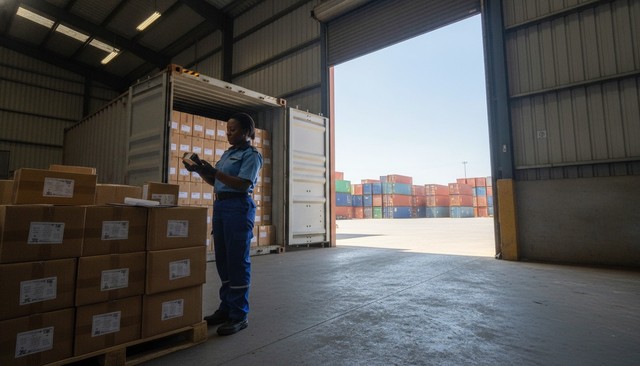
African exporters can qualify for preferential tariffs under the AfCFTA and still have their goods refused entry, because the destination market's product standards, labelling rules and certification requirements are a separate gate from the duty schedule.
Supply Chain Management
14 September 2026 • 3 min read
Tariff reduction has dominated the AfCFTA conversation. Conformity assessment has not — and it is the one that stops a container at the border. For freight forwarders, this is a planning problem that belongs upstream of the booking, not a clearing problem to be solved at destination.
Johan Eksteen, SGS Sub-Saharan Africa business manager for connectivity and products, told Freight News that the focus on tariff reductions has overshadowed the technical barriers businesses meet when moving products between African countries. "While much of the discussion has focused on tariff reductions and trade facilitation, successful cross-border trade depends equally on regulatory compliance, product quality and conformity assessment," he said.
The distinction matters operationally. Preferential access answers the question of what duty is payable. It does not answer whether the product may lawfully be sold in the destination market at all. "Every target market has specific regulatory requirements, safety standards, labelling obligations and product quality expectations that must be met before goods can enter the country," Eksteen said.
Sectors most exposed: Consumer goods including clothing, footwear, electrical products and cosmetics, alongside agricultural exports and industrial manufacturing — the categories where national standards and labelling rules diverge most sharply between African markets. (Source: SGS via Freight News, 2026)
In practice, companies encounter different national product standards, different labelling requirements and country-specific certification schemes. Testing requirements may also differ between markets, and exporters do not always fully understand the applicable rules of origin or market-entry conditions. A product freely sold in one African country may require further testing, inspection or certification before it can be sold in the next.
The cost profile is what should interest logistics operators. If these requirements surface only after the goods have shipped, the outcome is border delay and additional cost — demurrage, storage, re-testing, re-labelling, and in the worst case a consignment that cannot be sold where it was sent. None of that is recoverable from a tariff saving.
Eksteen argued that greater harmonisation of standards and mutual recognition of conformity-assessment results will be essential to realising the AfCFTA's benefits. Mutual recognition would let participating countries accept testing or certification completed elsewhere, removing the need to repeat the process market by market. SGS reports rising interest from manufacturers, importers, retailers and distributors expanding across African markets, and expects e-commerce to widen that demand further.
Until that recognition exists, the burden sits with the exporter and, by extension, with whoever arranged the movement. More integrated manufacturing and distribution networks will require a consistent compliance approach across several markets rather than treating each country in isolation — which is a supply chain design decision, not a documentation task.
Ask the compliance question before the booking, not at the border: which national regulations apply in the destination, whether product testing is required, what the labelling and registration obligations are. Build a per-market requirements sheet for repeat lanes and keep it current, because the same product moving from Windhoek to Lusaka and from Windhoek to Dar es Salaam may face two different sets of conditions.
Stay connected with Southern Africa's freight and transport community.
Join 6,400+ logistics professionals across the SADC region.
Visit Laaimylorrie.com| About the Author | |

|
Andre Klynsmith Entrepreneur & Technology Enthusiast Andre's expertise spans technology, blockchain, transport, and logistics — with a passion for innovation and driving positive change across industries. |
| Source: Freight News View source › | 7 September 2026 |


Subscribe to our Newsletter and stay in the know with all the latest Industry News, Products and Trends covering the whole of the SADC region.
KS Blockchain T/A Laaimylorrie.com . All Rights Reserved.