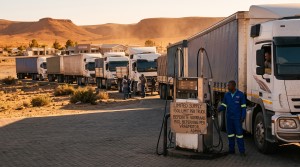
Industry related headlines to keep you in the know.
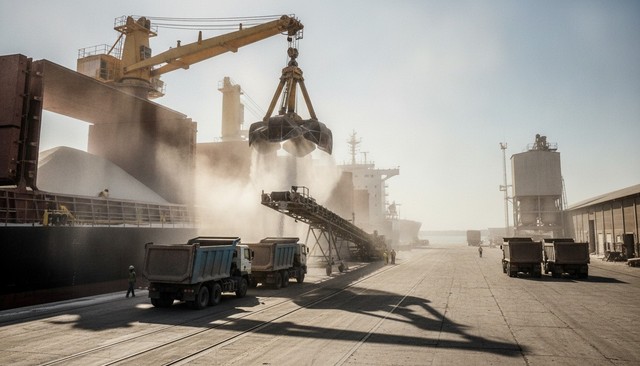
Global urea prices have fallen back to US$443 per tonne as Strait of Hormuz negotiations progress and China returns to the export market, but the benchmark is still 13.6% higher than a month ago and 13.2% higher than a year ago.
Mining and Commodities
14 September 2026 • 4 min read
Fertiliser is the largest single dry-bulk import most Southern African economies make that nobody in freight talks about. It moves in bulk vessels, it is bagged at the port, and it goes inland by road at exactly the moment the summer planting season starts. This year the price of it is being set in a waterway 7,000 kilometres away.
Urea traded at US$443 per tonne on 4 September 2026, easing marginally on the day, according to market reporting by Fertilizer Daily citing Trading Economics. The easing has two causes, and only one of them is durable. China has relaxed its export restrictions, expanding the 2026 export allowance to roughly 5–5.5 million tonnes, with July shipments jumping to about 403,000 tonnes from just 7,000 tonnes in June. India's RCF tender absorbed 1.78 million tonnes at prices below US$400 per tonne, reinforcing the trend.
The second cause is the perception of progress in Hormuz diplomacy — and that is a sentiment adjustment, not a supply one. Roughly a third of globally traded urea normally moves through the Strait of Hormuz. Until those cargoes are physically sailing again, the market is pricing an expectation rather than a delivery, and the price can reverse on a single headline.
Benchmark: Urea at US$443/t on 4 September 2026 — down on the day, but up 13.6% month-on-month and 13.2% year-on-year, with China's 2026 export allowance expanded to roughly 5–5.5 million tonnes. (Source: Fertilizer Daily, citing Trading Economics, 2026)
Northern Hemisphere planting has largely concluded, and Brazil — one of the world's largest fertiliser importers — has postponed purchases and taken less urea than a year earlier. Both factors are pulling demand out of the market at once. European production offers no relief: with Dutch TTF gas above €66.50 per megawatt-hour, break-even for an efficient European urea plant sits near US$605 per tonne ex-works, well above the traded price, which keeps European supply off the market rather than on it.
That window matters because Southern Africa's main planting season runs from October into December. Regional buyers are therefore in the market at precisely the point when two of the world's biggest buyers are out of it and China is shipping. If Brazil returns to active buying and China's remaining quota is used up before SADC cargoes are fixed, the arithmetic reverses quickly.
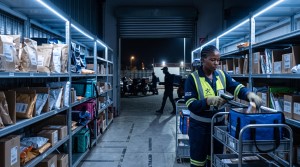
A swing of US$150 to US$200 per tonne on urea does not only change what a farmer pays. It changes the vessel. Buyers who can no longer fund a full handysize parcel split the order, which means more part-cargoes, more port calls, worse freight rates per tonne and more exposure to demurrage. It changes the bagging and warehousing plan at the discharge port, because a smaller, later cargo compresses the bagging window. And it changes the road cycle inland, because the same tonnage now has to reach the Free State, the Zambian Copperbelt farming districts or Zimbabwe's commercial farms in fewer weeks.
Sourcing has also moved. Chinese and Indian-origin urea arriving in Southern Africa follows a different sailing pattern and a different set of laycans from Gulf-origin product, and it competes for berth time with the region's other bulk imports. Hauliers quoting fertiliser season on last year's assumptions about arrival dates and origin ports are quoting the wrong job.
Treat the current easing as a booking window rather than a new normal, and confirm origin, vessel size and expected laycan with your customers now rather than in October. Bulk-handling and bagging operators should ask importers directly whether their tonnage is Gulf, Chinese or Indian origin this season, because it changes both the arrival profile and the berth competition. Hauliers should price the inland leg on a compressed delivery window, not last season's spread.
Stay connected with Southern Africa's freight and transport community.
Join 6,400+ logistics professionals across the SADC region.
Visit Laaimylorrie.com| About the Author | |

|
Andre Klynsmith Entrepreneur & Technology Enthusiast Andre's expertise spans technology, blockchain, transport, and logistics — with a passion for innovation and driving positive change across industries. |
| Source: Fertilizer Daily — Urea eases to $443/t as Hormuz negotiations and China's export surge quiet global supply fears View source › | 9 September 2026 |


Subscribe to our Newsletter and stay in the know with all the latest Industry News, Products and Trends covering the whole of the SADC region.
KS Blockchain T/A Laaimylorrie.com . All Rights Reserved.