Industry related headlines to keep you in the know.
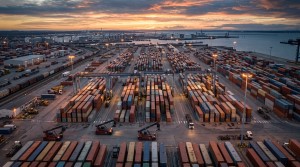
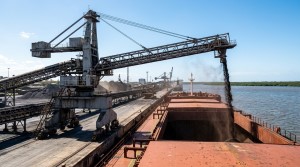
The Panama Canal Authority cut daily transits by four to 32 this month as it braces for drought conditions from an expected El Nino, and has postponed a further half-foot draft reduction in the Neopanamax locks until further notice. With Hormuz contested and Bab el-Mandeb still unsettled, a third global chokepoint is now constraining capacity at the same time.
Warehousing and Storage
13 September 2026 • 3 min read
No SADC importer can influence a canal draft restriction, a war-risk premium or a Houthi threat assessment. What every SADC importer can control is how much stock sits on this side of the ocean when those three things move at once.
The Authority's September measures reduce daily transits to 32, although Neopanamax daily slots, which are the ones long-haul container vessels use, have been trimmed by only one. The postponement of an additional half-foot draft reduction is a reprieve rather than a reversal, and the underlying reason for the measures has not gone away.
Draft restrictions matter more than transit counts for cargo owners. A vessel that cannot load to its marks carries fewer boxes per sailing, which tightens effective capacity on a lane without any ship being withdrawn from it.
Capacity squeeze: Panama daily transits cut by four to 32 for September, with a further half-foot Neopanamax draft reduction postponed but not cancelled. (Source: Panama Canal Authority via Freightos, 2026)
Cape of Good Hope routeing already adds roughly 10 to 14 days to an Asia to Europe voyage. That is a known quantity and can be planned around. The harder problem is that recent port worker strikes in Germany and the Netherlands pushed schedule reliability into single digits, meaning the arrival date on a booking confirmation now carries very little information.
A longer but predictable transit is an inventory cost. An unpredictable transit is an inventory risk, and the two require entirely different responses. The first can be absorbed by ordering earlier. The second can only be absorbed by holding stock.
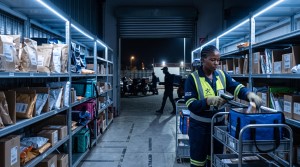
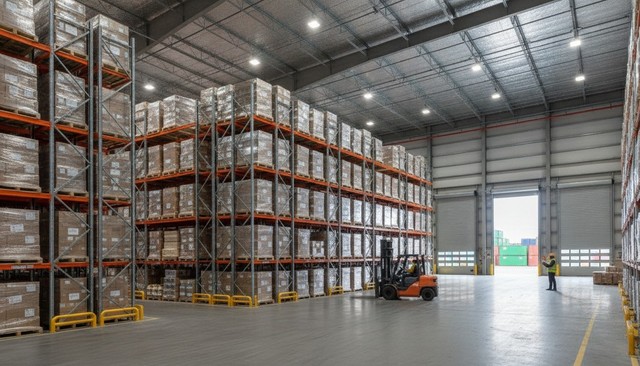
For SADC importers, the storage decision is also a cash decision. Holding buffer stock in a bonded facility at Walvis Bay, Durban or an inland container depot defers duty and VAT until the goods are actually needed, which makes a larger buffer considerably cheaper to carry than the same stock cleared on arrival.
The inland dimension matters too. Cargo destined for Lusaka, Lubumbashi, Gaborone or Harare takes a road leg measured in days after it lands, so a buffer positioned at the coast still leaves the corridor exposed. Splitting safety stock between a port-adjacent bonded store and an inland depot closer to the customer costs more in rent and buys back more in service reliability.
Stop setting safety stock off an average transit time and start setting it off the worst transit you have actually experienced in the past twelve months. Identify the ten or twenty SKUs that would stop a customer's operation if they ran out, and hold those in bonded storage on this side of the ocean. For everything else, longer transit is a planning input rather than a crisis.
Stay connected with Southern Africa's freight and transport community.
Join 6,400+ logistics professionals across the SADC region.
Visit Laaimylorrie.com| About the Author | |

|
Andre Klynsmith Entrepreneur & Technology Enthusiast Andre's expertise spans technology, blockchain, transport, and logistics -- with a passion for innovation and driving positive change across industries. |
| Source: Freightos — Weekly Freight Update (citing Panama Canal Authority advisories) View source › | 8 September 2026 |


Subscribe to our Newsletter and stay in the know with all the latest Industry News, Products and Trends covering the whole of the SADC region.
KS Blockchain T/A Laaimylorrie.com . All Rights Reserved.