Industry related headlines to keep you in the know.
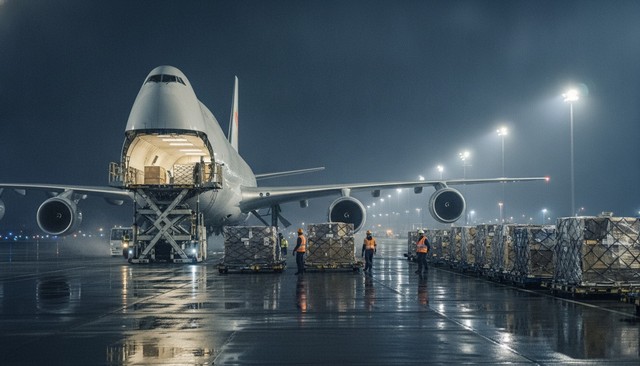
Air cargo rates out of the Far East rose about 5% in the first week of September, to $6.30 per kilogram to the United States and $4.88 per kilogram to Europe. Rates are climbing not because air demand has suddenly boomed, but because ocean transit has become unreliable enough that shippers are willing to pay to step off it.
Aviation
13 September 2026 • 3 min read
Air freight has always been the expensive option. What has changed in 2026 is that the gap between an air rate and a reliable sea rate has narrowed enough that the calculation is worth running for cargo that used to be automatically containerised.
In the week to 8 September, the Freightos Air Index recorded China to North America up 5% and China to North Europe up 6%, while North Europe to North America held level. The increases came alongside operational disruption at both ends of the network: Miami International Airport returned to normal operations after a freighter crash, and most Indonesian airports reopened following a volcanic eruption that had closed them since late the previous week.
A severe typhoon striking Far East container hubs in the same week contributed to the rate movement, pulling volume that would ordinarily have sailed onto aircraft at short notice. That is the pattern worth noticing: air rates are now moving in response to events in the ocean freight market.
Fuel is the floor: jet fuel prices are back to May levels and bunker fuel to levels last seen in June, with both fuels running about 60% higher than before the start of the war. (Source: Freightos, 2026)
Fuel costs have trended up since the collapse of the ceasefire in July, and the recent escalation around the Strait of Hormuz combined with stronger Chinese crude imports has pushed bunker prices back towards their June highs. Jet fuel has followed. Both fuels sitting roughly 60% above pre-war levels means neither air nor ocean pricing has much room to fall, whatever demand does.
For a shipper, that removes one of the traditional arguments for waiting. If the expectation is that freight costs revert to normal once the peak season passes, an elevated fuel floor makes that revert shallower and slower than it would once have been.
Southern Africa does not sit on the Asia to Europe or transpacific lanes where these rates are set, but it buys from them. Spares, electronics, pharmaceutical inputs, mining consumables and high-value components for SADC industry are ordered from the same Far East suppliers whose ocean bookings are being displaced, and they compete for the same aircraft capacity on the way south.
The practical effect is that lead times into OR Tambo, Walvis Bay and the region's inland cargo terminals now carry the same volatility as the sea lanes they are meant to bypass, and belly-hold space on the Gulf and Asia routings is being competed for by shippers who were not in the air market a year ago.
Do the air-versus-sea sum on a per-consignment basis rather than by policy, and include the cost of the delay, not only the cost of the freight. A stalled production line, a missed contractual delivery or a mine waiting on a critical spare will often justify an air rate that looks indefensible on a per-kilogram comparison. Build a standing relationship with an air-capable forwarder now, before you need one at 48 hours' notice.
Stay connected with Southern Africa's freight and transport community.
Join 6,400+ logistics professionals across the SADC region.
Visit Laaimylorrie.com| About the Author | |

|
Andre Klynsmith Entrepreneur & Technology Enthusiast Andre's expertise spans technology, blockchain, transport, and logistics -- with a passion for innovation and driving positive change across industries. |
| Source: Freightos — Weekly Freight Update View source › | 8 September 2026 |


Subscribe to our Newsletter and stay in the know with all the latest Industry News, Products and Trends covering the whole of the SADC region.
KS Blockchain T/A Laaimylorrie.com . All Rights Reserved.