Industry related headlines to keep you in the know.
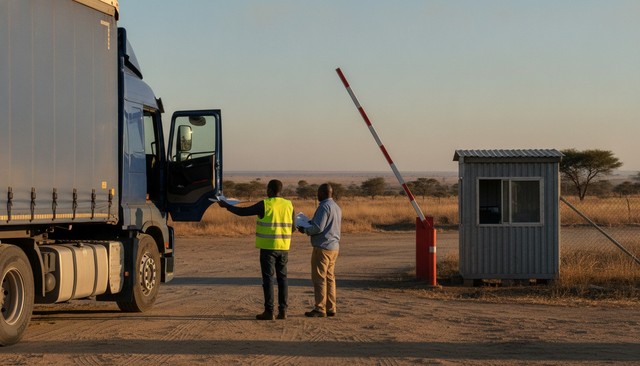
The fastest-growing category of cargo theft in 2026 involves no hijacking, no forced entry and no violence. The criminal simply books the load, collects it legitimately at the gate and disappears - and the industry's exposure is now being repriced by its insurers.
Fleet Management
13 September 2026 • 4 min read
The International Union of Marine Insurance and TAPA EMEA warned in early 2026 of a significant increase in cargo thefts involving fraudulent carriers. Insurers are responding with higher deductibles and specific restrictions on shipments arranged through public freight marketplaces - which means the cost of weak vetting is landing on legitimate operators too.
Writing in the International Union of Marine Insurance's September newsletter, Frederic Becard of AXA XL describes a shift that will be familiar to anyone who has hunted for backhaul capacity under time pressure. Criminal groups no longer need to intercept a truck. They register on a freight exchange under a false or borrowed identity, win a load, present at collection with credible paperwork, and are gone before anyone notices that the carrier on the booking does not exist in the form claimed.
Becard links the trend directly to the digitalisation of freight procurement. Online exchanges and public load boards have genuinely improved efficiency and market access, particularly for smaller operators who previously had no route to a shipper's tender list. The same low barrier to entry, combined with inconsistent vetting standards between platforms, is what organised groups exploit.
Insurer response: Some underwriters are now imposing higher deductibles, reduced limits or specific restrictions for shipments arranged through public freight marketplaces. (Source: IUMI, 2026)
Becard is blunt about the limits of the underwriting response. Higher deductibles and marketplace exclusions shift risk back onto cargo interests and logistics providers without reducing the underlying threat. The problem, in his framing, is one of prevention rather than risk transfer - and prevention means carrier onboarding procedures, identity verification, continuous monitoring of credentials and fraud detection that actually runs, rather than a form that is completed once.
He also raises a question the platform sector has largely avoided. Freight exchanges typically position themselves as neutral intermediaries. As losses accumulate, shippers, insurers and regulators are likely to press for transparency on how carriers are actually verified - and, depending on the jurisdiction and the case law, platforms may find themselves argued into liability for inadequate vetting rather than sitting outside the transaction.
There is an uncomfortable second-order effect here for genuine transporters. When an insurer restricts cover for marketplace-sourced business, it does not distinguish between the operator with twenty tracked vehicles and a fifteen-year trading history and the entity created three weeks ago. A blanket restriction prices them the same way, and the shipper responds by narrowing its carrier list to names it already knows.
That is precisely the outcome digital matching was supposed to prevent. The practical defence for a legitimate fleet is therefore to make its own identity expensive to imitate and easy to confirm: verifiable company registration and operating licences, named and contactable operational staff, vehicle registrations and tracking that a customer can check independently, consistent banking details that never change by email, and a clean documented history that can be handed over in one file when a new client asks. Being verifiable is becoming a commercial asset, not an administrative burden.
If you subcontract, verify the subcontractor's identity independently of whatever the platform displays - company registration, licence, driver and vehicle details confirmed by phone to a number you sourced yourself, never one supplied in the booking thread. Treat a late change of banking details or collection driver as a stop signal rather than an inconvenience. And if you are the carrier, assemble a standing verification pack now: in a market where shippers are tightening their lists, the operator who can prove who it is will keep getting the load.
Stay connected with Southern Africa's freight and transport community.
Join 6,400+ logistics professionals across the SADC region.
Visit Laaimylorrie.com| About the Author | |

|
Andre Klynsmith Entrepreneur & Technology Enthusiast Andre's expertise spans technology, blockchain, transport, and logistics - with a passion for innovation and driving positive change across industries. |
| Source: International Union of Marine Insurance (IUMI) View source › | 9 September 2026 |





Subscribe to our Newsletter and stay in the know with all the latest Industry News, Products and Trends covering the whole of the SADC region.
KS Blockchain T/A Laaimylorrie.com . All Rights Reserved.