Industry related headlines to keep you in the know.
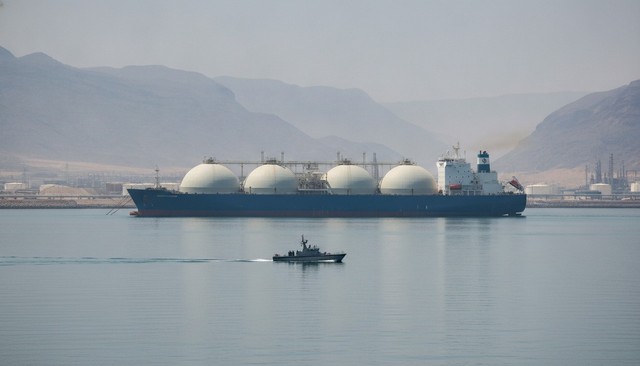
Qatar and Iran held talks in Tehran in late August on a proposed temporary shipping corridor through the Strait of Hormuz and a joint project to clear mines from the waterway. The negotiation, rather than any military breakthrough, is now the most likely route to restored energy flows.
Politics Insight
11 September 2026 • 5 min read
Qatar shipped 18 LNG cargoes in the first six months of the war against 509 in the same period a year earlier — a fall of roughly 96%. A negotiated, metered corridor is a very different reopening from a return to normal, and SADC energy buyers should plan for the former.
Qatar exported 18 LNG cargoes during the first six months of the conflict, compared with 509 across the equivalent period the previous year. The country is estimated to have forgone around US$24 billion in gas sales over that window, and QatarEnergy remains under force majeure on some deliveries, with cancellations extending into early November.
Part of the shortfall is physical rather than logistical. Iranian missile attacks in March damaged two LNG-producing trains at Ras Laffan, the world's largest LNG export facility, curtailing production by 12.8 million tonnes a year — roughly 17% of Qatari LNG export capacity. Even a fully open strait would not immediately restore that volume.
Export collapse: 18 Qatari LNG cargoes in six months against 509 a year earlier — about a 96% decline — with combined Qatar and UAE loadings down 35 billion cubic metres between March and June year on year. (Source: Euronews, 2026)
Qatar's entire LNG output has to transit Hormuz to reach international markets. There is no pipeline and no alternative sea route. That single geographic fact is why a waterway dispute translates directly into a global gas supply problem, and why Doha has an incentive to negotiate transit arrangements with Tehran even while the wider conflict remains unresolved.
The proposals under discussion — a temporary corridor and cooperative mine clearance — describe a managed, conditional passage. Mine clearance in particular is slow, technically demanding work, and a corridor that depends on it will open in stages, for specified vessels, under specified escort and insurance conditions. That is a rationing mechanism, not a reopening.
SADC does not import much Qatari LNG directly, but the region buys refined product, LPG and gas-linked inputs into a global market whose pricing has been set by this shortfall since March. When the largest single LNG exporter loses most of its outbound volume, cargoes are re-tendered, long-term contracts are renegotiated and spot buyers without take-or-pay protection move to the back of the queue. Smaller, less creditworthy importers feel that first.
There is a second-order effect on freight. A partial corridor reopening would release tanker and gas-carrier tonnage currently locked into extended voyages, which would loosen the vessel scarcity that has driven charter rates for much of 2026. Operators should note that this easing would arrive gradually and could reverse on a single incident, because the corridor's legal and insurance basis would be provisional throughout.
Treat news of a Hormuz corridor as a partial, reversible easing rather than a signal to unwind contingency planning. Importers of fuel, LPG and gas-linked inputs should keep alternative supply arrangements and longer cover in place through the fourth quarter, and anyone budgeting on a return to pre-war energy freight costs should hold that assumption until a corridor has actually run cargoes for a sustained period.
Stay connected with Southern Africa's freight and transport community.
Join 6,400+ logistics professionals across the SADC region.
Visit Laaimylorrie.com| About the Author | |

|
Andre Klynsmith Entrepreneur & Technology Enthusiast Andre's expertise spans technology, blockchain, transport, and logistics — with a passion for innovation and driving positive change across industries. |
| Source: Euronews — Six months into Hormuz blockade, Qatar and UAE test ways to keep LNG moving View source › | 8 September 2026 |


Subscribe to our Newsletter and stay in the know with all the latest Industry News, Products and Trends covering the whole of the SADC region.
KS Blockchain T/A Laaimylorrie.com . All Rights Reserved.