Industry related headlines to keep you in the know.
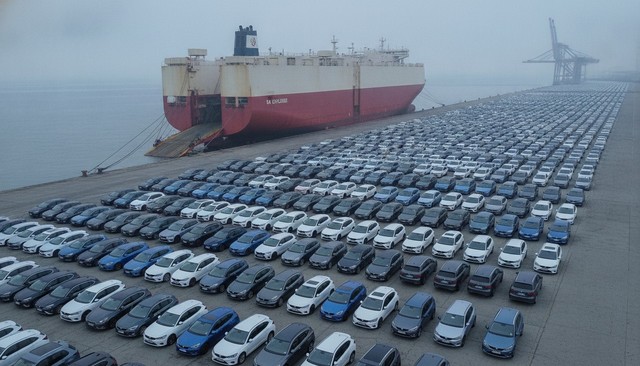
South Africa risks losing access to its largest automotive export market unless it introduces an end-of-life vehicle framework aligned with new European Union circularity requirements, with R291 billion in export revenue at stake according to the Motor Industry Staff Association.
Business Insights
10 September 2026 • 3 min read
Roughly three quarters of vehicles exported from South Africa go to Europe. If the EU's incoming rules on recycled content, circular design and producer responsibility are not matched by a domestic framework, the result is a non-tariff barrier -- and the cargo flow that fills car carriers out of Durban, Gqeberha and East London goes with it.
The EU is finalising regulations covering recycled materials in new vehicles, circular vehicle design and manufacturer responsibility across a vehicle's full lifecycle. An end-of-life vehicle framework is the legal mechanism that allows vehicles reaching the end of their useful lives to be systematically depolluted, dismantled and recycled -- and to have that recovery documented.
MISA has warned that failure to align South African regulations with these requirements could create a non-tariff barrier for locally manufactured vehicles entering the European market, and has called on the Department of Trade, Industry and Competition to accelerate development of an ELV framework. The stakes are not marginal: the automotive industry contributes roughly 5.2% of South Africa's GDP and supports an estimated 500 000 formal jobs across the wider value chain.
Exposure: R291bn in export revenue at risk; about three quarters of South African vehicle exports are Europe-bound; the sector is 5.2% of GDP and around 500 000 formal jobs. (Source: MISA via Freight News, September 2026)
MISA Operations Chief Executive Martlé Keyter raised the issue at a recent DTIC stakeholder workshop attended by automotive industry representatives and a delegation from Japan's Ministry of Economy, Trade and Industry. Her argument is that the framework must carry formal employment, enforceable wage standards, collective bargaining coverage and occupational health and safety protections.
"MISA will not accept a framework that treats workers as an afterthought. Every dismantler, recycler and technician must have safe working conditions, recognised qualifications and career pathways," Keyter said. The union has asked for Japanese technical expertise on worker safety, training systems and the commercial viability of small-scale dismantling businesses -- Japan's Automobile Recycling Law supports thousands of small enterprises and has helped the country reach vehicle material recovery rates close to 99%.
Trade, Industry and Competition Minister Parks Tau has flagged the same pressure. Speaking at the Export Symposium and Exhibition in the Eastern Cape last month, he noted that measures such as the EU's Carbon Border Adjustment Mechanism are forcing South Africa to adapt its industrial and export strategies, and that automotive policy decisions must be taken well in advance because of the sector's long production and investment lead times.
For logistics, there are two distinct consequences. The obvious one is downside risk: finished vehicle exports are a high-volume, schedule-critical flow through South African ports, and a market access disruption would be felt immediately by carriers, terminals and inland hauliers. The less obvious one is upside. A formal ELV industry creates a new domestic freight category -- collecting scrapped vehicles, moving them to licensed dismantlers, and hauling separated steel, aluminium, plastics and batteries onward to recyclers. That is reverse logistics at national scale, and it does not exist in an organised form today.
Watch the DTIC's ELV process the way you would watch a tender pipeline. If the framework lands, it creates scheduled collection routes, licensed-site deliveries and hazardous-material handling requirements across the region -- work that suits established hauliers with compliance systems already in place. And if it stalls, the automotive export volumes many SADC operators depend on indirectly become a lot less certain from 2027 onward.
Stay connected with Southern Africa's freight and transport community.
Join 6,400+ logistics professionals across the SADC region.
Visit Laaimylorrie.com| About the Author | |

|
Andre Klynsmith Entrepreneur & Technology Enthusiast Andre's expertise spans technology, blockchain, transport, and logistics -- with a passion for innovation and driving positive change across industries. |
| Source: Freight News View source › | 9 September 2026 |




Subscribe to our Newsletter and stay in the know with all the latest Industry News, Products and Trends covering the whole of the SADC region.
KS Blockchain T/A Laaimylorrie.com . All Rights Reserved.