Industry related headlines to keep you in the know.
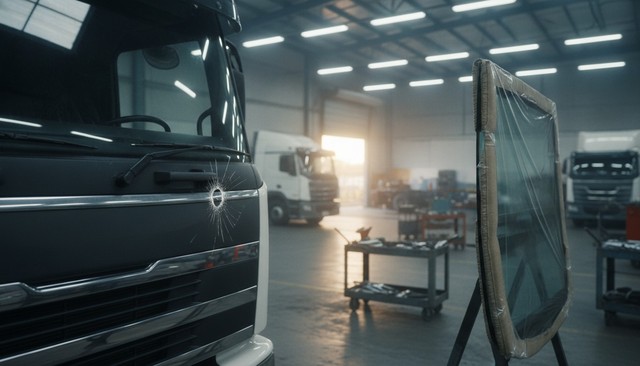
The South African Revenue Service has imposed definitive anti-dumping duties of up to 129.15% on vehicle windscreens imported from China and Malaysia, in two tariff notices dated 4 and 7 September 2026.
ECONOMY AND MARKETS
9 September 2026 • 4 min read
This is a trade remedy that lands directly on a fleet maintenance line item. Windscreen replacement is one of the highest-frequency repairs in long-haul road transport, and a duty of up to 129.15% on the cheapest imported supply changes what that repair costs.
According to a tariff notice dated 7 September, Chinese front windscreens classified under tariff subheading 8708.22.10 are now subject to manufacturer-specific duties. Windscreens produced by Dongguan Kong Wan Automobile Glass attract a duty of 28.39%. Products manufactured by Xinyi Automobile Glass and Dongguan Benson Automobile Glass attract 12.92%. All other Chinese manufacturers face 129.15%, although the notice excludes BSG Auto Glass and Fuyao Glass Industry Group alongside the three named companies with specified rates.
The Chinese measure follows definitive anti-dumping duties on Malaysian vehicle windscreens introduced on 4 September. Under SARS Notice R.7888, windscreens manufactured or exported by Xinyi Energy Smart Malaysia carry a duty of 12.92%, while imports from all other Malaysian manufacturers and exporters attract 129.15%. The Malaysian duties apply to vehicle windscreens under tariff subheading 7007.21.20 and front windscreens under 8708.22.10. Both measures were implemented through amendments to Part 1 of Schedule 2 of the Customs and Excise Act.
The spread that matters: 12.92% for named exporters, 28.39% for one Chinese manufacturer, and 129.15% for everyone else — on the same product, under the same tariff subheading. (Source: SARS tariff notices, 4 and 7 September 2026, via Freight News)
Anti-dumping duties of this structure are company-specific by design. Exporters who participated in the investigation and could evidence their pricing received individual rates; those who did not are assigned the residual rate. The practical consequence for buyers is that two visually identical windscreens, entering under the same tariff subheading from the same country, can differ in landed cost by more than a hundred percentage points depending solely on which factory made them and whether that factory is named in the notice.
That places a documentation burden on importers and parts distributors that did not exist a week ago. Manufacturer identity has moved from a quality question to a customs valuation question, and getting it wrong on a declaration is a costly error to unwind after the fact.
Stone damage on gravel feeder roads, chipped glass from oncoming traffic on unswept national routes, and cracks that spread overnight in the temperature swing between a Karoo night and a Highveld morning make windscreen replacement a routine cost in SADC road freight rather than an exceptional one. Fleets that budget a fixed cost per vehicle per year for glass will need to revisit that assumption once distributor stock bought before the duties works through.
There is a regional dimension too. Namibian, Botswanan and other SACU-area operators source a substantial share of parts through South African distributors, so duties applied at South African ports of entry flow through to replacement pricing across the customs union. Operators outside SACU may find direct sourcing more attractive than they did in August — but should weigh that against fitment quality, warranty and the insurance implications of non-approved glass.
Ask your glass supplier now which manufacturer they source from and what duty rate applies — the difference between an excluded or named-rate producer and the 129.15% residual rate will show up in your next quote, not your next financial year. Fleets with maintenance contracts or fixed-price glass arrangements should check whether the agreement allows the supplier to pass through statutory duty increases mid-term. Importers and parts distributors should tighten the manufacturer-identification evidence attached to declarations under subheadings 7007.21.20 and 8708.22.10 before the first post-notice consignments clear.
Stay connected with Southern Africa's freight and transport community.
Join 6,400+ logistics professionals across the SADC region.
Visit Laaimylorrie.com| About the Author | |

|
Andre Klynsmith Entrepreneur & Technology Enthusiast Andre's expertise spans technology, blockchain, transport, and logistics — with a passion for innovation and driving positive change across industries. |
| Source: Freight News View source › | 7 September 2026 |


Subscribe to our Newsletter and stay in the know with all the latest Industry News, Products and Trends covering the whole of the SADC region.
KS Blockchain T/A Laaimylorrie.com . All Rights Reserved.