Industry related headlines to keep you in the know.
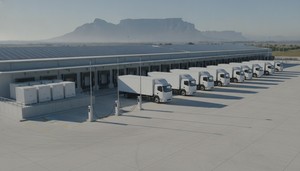
Namport says its investment pipeline is the strongest in the port authority's history, but its own commercial executive has named the three things still holding the Walvis Bay corridors back: rail that lags freight demand, borders that are not harmonised, and logistics costs driven by fuel, tolls and empty return legs.
TRANSPORTATION
7 September 2026 • 4 min read
“Walvis Bay is not trying to be Durban or Dar es Salaam. We are a different proposition and our competitive advantage lies in being precisely that.” Namport's commercial executive is making a positioning argument — and it has direct consequences for how SADC hauliers should price and plan corridor work.
Elias Mwenyo, executive for commercial services at the Namibian Ports Authority, describes the current investment pipeline as “arguably the most exciting it has been in Namport's history”. At Walvis Bay, the defining milestone of the past five years has been container handling capacity — new terminal berths, expanded stacking areas and upgraded handling equipment that lifted throughput capacity and productivity together.
Mwenyo is blunt about what that bought Namibia commercially. “This investment alone has changed the competitive calculus for shipping lines and freight operators evaluating gateway options,” he says. But he frames the wider point differently: “The infrastructure story is not just about Walvis Bay. It is about the full corridor ecosystem, and that system is materially stronger today than it was a decade ago.”
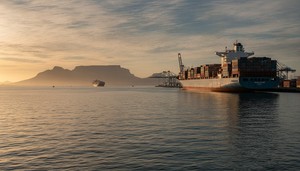
Gateway scale: The Port of Walvis Bay handles roughly 8 million tonnes of cargo a year across about 899 vessel calls, with container throughput capacity of 750 000 TEUs. (Source: Namibian Ports Authority, 2026)
The second port in the pipeline is Lüderitz. Namport is preparing the southern port as a potential offshore logistics hub and supply base for Namibia's emerging oil and gas sector, with infrastructure planning already under way and engagement running across government, operators and the wider supply chain so that capacity exists when production begins.
Beyond the two ports, corridor road upgrades, dry port developments and cross-border infrastructure investment are all cited as contributors to Namibia's logistics competitiveness for landlocked markets — Botswana, Zambia and the Democratic Republic of Congo chief among them.
The first is rail. Connectivity continues to lag freight demand, which leaves the corridors heavily reliant on road transport and pushes logistics costs up. “Unlocking the full potential of the Trans-Kalahari, Trans-Caprivi and Trans-Cunene corridors requires a deliberate shift towards multimodal integration,” Mwenyo says.
The second is the border. Mwenyo puts single-window systems, risk-based inspection models and 24-hour border operations in the same sentence and calls them “not optional” but “competitive imperatives”. The third is cost structure — fuel prices, road tolls, inefficient cargo consolidation and limited backloading opportunities, all of which continue to weigh on regional competitiveness. Notably, two of those three are things hauliers and freight matchers influence directly, not things a port authority can fix with capital expenditure.
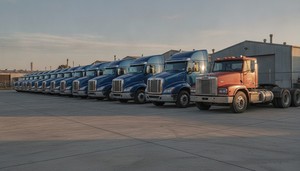
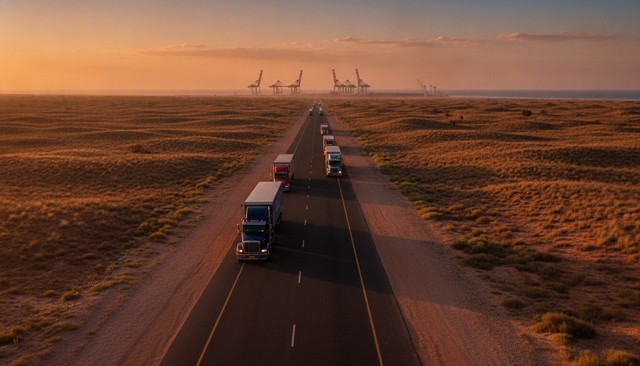
While rail remains behind demand, the road leg on the Trans-Kalahari, Trans-Caprivi and Trans-Cunene corridors stays the revenue leg — but Namport has publicly identified poor consolidation and limited backloading as cost drivers, which means empty return kilometres are now an industry-level problem, not just a private margin issue. Operators running to and from Walvis Bay should treat return-load sourcing and consolidation partnerships as competitive infrastructure of their own, and should be planning for the day multimodal handover points make road-only quoting look expensive.
Stay connected with Southern Africa's freight and transport community.
Join 6,400+ logistics professionals across the SADC region.
Visit Laaimylorrie.com| About the Author | |

|
Andre Klynsmith Entrepreneur & Technology Enthusiast Andre's expertise spans technology, blockchain, transport, and logistics — with a passion for innovation and driving positive change across industries. |
| Source: Freight News — “Walvis Bay focuses on full corridor ecosystem” by Liesl Venter View source › | 7 July 2026 |






Subscribe to our Newsletter and stay in the know with all the latest Industry News, Products and Trends covering the whole of the SADC region.
KS Blockchain T/A Laaimylorrie.com . All Rights Reserved.