Industry related headlines to keep you in the know.
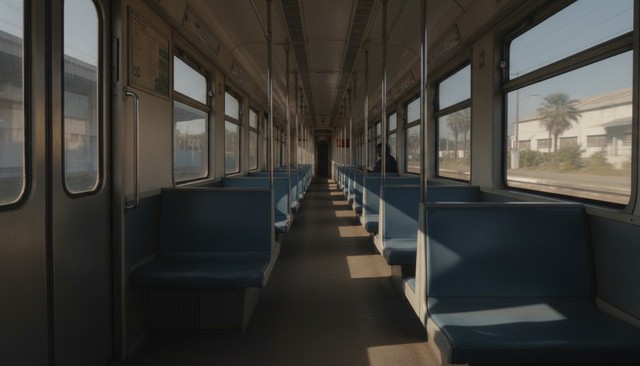
Durban's Metrorail commuter service carried an average of about 33 000 passengers a day in the 2025/26 financial year, down from roughly 56 000 the year before — a 41% fall and the first decline since 2021/22.
PUBLIC TRANSPORT
6 September 2026 • 4 min read
Durban's rail network carried about 281 000 people a day in 2018. It now carries a fraction of that, and the recovery has stalled on infrastructure that cannot be repaired fast enough. Every commuter who leaves the train joins the road — on the same corridors freight has to share.
The Passenger Rail Agency of South Africa's own figures, obtained by GroundUp, show Durban ridership falling from about 56 000 daily passengers in 2024/25 to roughly 33 000 in 2025/26. The low point of the post-Covid collapse was about 9 700 a day in 2021/22, after vandalism and infrastructure failure gutted the network, so the service had been climbing until this year.
PRASA spokesperson Andiswa Makanda attributed the drop to difficulties repairing damaged and vandalised infrastructure. The current financial year shows some improvement: about 982 000 passengers a month on average from April to July 2026, against roughly 850 000 a month through 2025/26. Train trips have also increased, from an average of 124 a day in 2024/25 to about 170 a day now.
Durban daily rail passengers: ~281 000 in 2018 → ~9 700 in 2021/22 → ~56 000 in 2024/25 → ~33 000 in 2025/26. (Source: PRASA figures via GroundUp, 2026)
The Bluff line remains closed. The Chatsworth line runs on a single track between Merebank and Crossmoor, meaning trains can move in only one direction at a time, and the Old Main line is single-track between Rossburgh and Pinetown. The Southern Coast line, previously terminating at Isipingo, has been extended five stops to Winklespruit, but the remainder is on hold until the Illovo bridge — destroyed by floods in 2022 — is rebuilt. Only sections of the Northern Coast and KwaMashu lines are operating, and the KwaMashu–Umlazi line, with 17 return trips a day, is the only one running both north and south of Durban station.
Makanda said Crossmoor is due to be fixed in September and Pinetown by November. Overhead lines and signalling equipment on the Northern Coast and KwaMashu lines have been stolen or vandalised and need replacing — and parts of those lines are owned by Transnet, not PRASA. The agency has been trying for at least two years to finalise a memorandum of understanding with Transnet to get that work done; in September 2024 it described the talks as being at an advanced stage.
The passenger data itself carries a caveat worth noting: ticket offices at some stations are frequently closed, tickets are rarely checked, and PRASA does not count passengers travelling without paying. Nineteen stations now offer card machines, but a GroundUp reporter attempting to pay by card at Durban station was told digital payments were closed and to pay cash, with a card machine visible in the booth but no operator available.
Service reliability is the other half of the story. On a ride-along in late August, a train scheduled to leave Durban at 08:29 departed at 08:36 carrying about five passengers, with roughly ten more joining by Reunion. The return train was timetabled for 09:43, an official then said 10:30, and it arrived at 10:15 — with the timetables displayed at Reunion and Durban stations not matching each other. Trains and stations were clean, with visible security on platforms and staff clearing vegetation from the rails, but station escalators remain unrepaired and fencing at some stations is still broken.
Commuter rail failure is a freight problem in disguise. Twenty-three thousand daily passengers displaced from Durban's trains do not disappear — they move to minibuses and cars on the same M4, N2 and N3 approaches your trucks use to reach the port, lengthening peak windows and narrowing the hours in which a delivery slot is realistic. Two practical responses: build the widened peak into your Durban turnaround assumptions rather than treating congestion as an exception, and watch the PRASA–Transnet negotiation over the jointly owned lines, because that same shared-asset problem shapes freight rail access on corridors across the region. Operators in Windhoek, Lusaka, Harare and Maputo should also read this as a warning: passenger rail decline reliably arrives before, not after, road congestion becomes structural.
Stay connected with Southern Africa's freight and transport community.
Join 6,400+ logistics professionals across the SADC region.
Visit Laaimylorrie.com| About the Author | |

|
Andre Klynsmith Entrepreneur & Technology Enthusiast Andre's expertise spans technology, blockchain, transport, and logistics -- with a passion for innovation and driving positive change across industries. |
| Source: GroundUp View source › | 1 September 2026 |


Subscribe to our Newsletter and stay in the know with all the latest Industry News, Products and Trends covering the whole of the SADC region.
KS Blockchain T/A Laaimylorrie.com . All Rights Reserved.