Industry related headlines to keep you in the know.
South African Police Service figures show 327 truck hijackings reported between April and June 2026, down from 414 in the same period last year — a 21% decline that road freight operators say reflects fewer reports rather than fewer crimes.
FLEET MANAGEMENT
6 September 2026 • 4 min read
A falling crime statistic is only useful if the reporting behaviour behind it has stayed constant. The Road Freight Association says it has not — and the one number that has moved in a straight line is what operators spend on security, from roughly 0.3% of vehicle operating cost a decade ago to about 2.3% at the end of 2025.
The quarterly SAPS crime statistics put Gauteng far ahead of every other province with 219 reported truck hijackings, followed by KwaZulu-Natal on 31 and Mpumalanga on 27. The Eastern Cape recorded 14 cases, North West 11, the Western Cape 10, the Free State and Limpopo seven each, and the Northern Cape one.
That distribution maps closely onto the country's freight geography — the Gauteng industrial core and the corridor running down to Durban. For SADC operators, it is the same ground their long-haul units cover on every northbound and southbound leg out of the Port of Durban.
Security as a share of vehicle operating cost: roughly 0.3% ten years ago, about 2.3% by the end of 2025, and approximately 4.1% for operations carrying high-risk cargo such as cash, electronics, fuel, spirits and medicines. (Source: Road Freight Association Vehicle Cost Index, 2026)
Road Freight Association chief executive Gavin Kelly told Freight News that any decline looks positive on paper but depends entirely on operators continuing to report every incident. "Full reporting happens when faith in the criminal justice system prevails. It does not," he said. Many operators, he added, "have given up on any real action by the SAPS, the apprehension and removal of those who perpetrate the crime and the closure of criminal rings involved."
There is also a direct operational deterrent. Kelly said many operators are not interested in having vehicles taken into police custody as evidence: "More often than not, vehicles are stripped, cargo 'disappears' and the operator loses the vehicle and the customer's goods." Many hijackings are reported only because an insurer requires a case number — self-insured operators may simply repair the unit and return it to service, because "a standing asset is worthless — in fact, it costs the operator."
Positive Freight Solutions chief executive Alex Hill said attempted hijackings are seldom reported, and cases where a vehicle is recovered after its cargo was taken may be classified as theft out of a motor vehicle rather than hijacking. Losses below the insurance excess are often absorbed instead of spending a day at a distant police station, and some drivers do not report incidents at all for fear of reprisals.
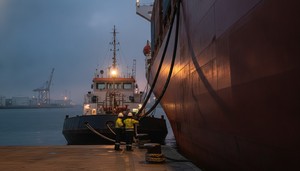
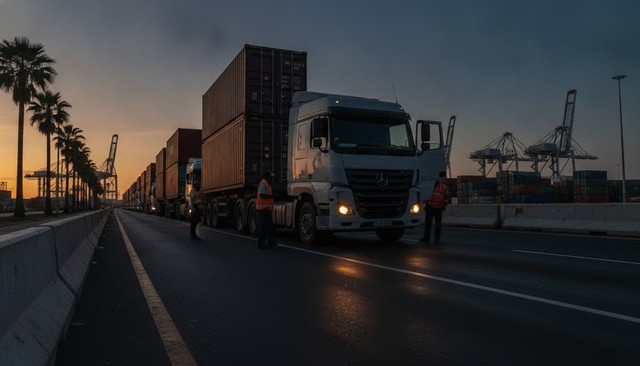
Hill linked the exposure directly to queueing at the Port of Durban, where vehicles can stand for between four and 22 hours waiting to collect a container. "A stationary truck is a target and a truck that is stationary at a known place, at a predictable time, for a predictable duration is a gift," he said, arguing that the congestion crisis and the corridor's crime exposure "are not separate stories". He has called for a joint industry and SAPS task team to deal with syndicates and with the difficulty operators face in reporting and recovering cargo.
Do not let a national statistic set your risk assumption or your insurance conversation — your own incident register is the only number that reflects your exposure, and it is only reliable if you log attempted hijackings, cargo-only losses and below-excess losses alongside the ones you claim for. Budget security as a real line in cost-per-kilometre rather than an overhead: at 2.3% of operating cost, and above 4% on high-risk loads, it is now larger than several items operators track far more closely. And treat predictable standing time — port queues, border waits, overnight stops at the same place each week — as a routing and scheduling risk, not just a productivity loss.
Stay connected with Southern Africa's freight and transport community.
Join 6,400+ logistics professionals across the SADC region.
Visit Laaimylorrie.com| About the Author | |

|
Andre Klynsmith Entrepreneur & Technology Enthusiast Andre's expertise spans technology, blockchain, transport, and logistics -- with a passion for innovation and driving positive change across industries. |
| Source: Freight News View source › | 1 September 2026 |




Subscribe to our Newsletter and stay in the know with all the latest Industry News, Products and Trends covering the whole of the SADC region.
KS Blockchain T/A Laaimylorrie.com . All Rights Reserved.