Industry related headlines to keep you in the know.
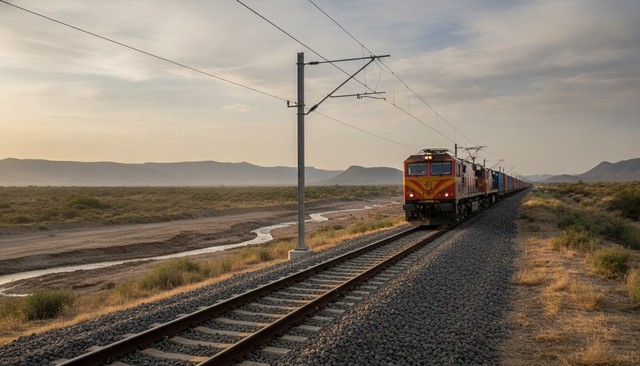
Electric train operations have resumed on the Cape mainline after Transnet completed repairs at five storm-damaged locations in the Western Cape, ending a disruption that closed sections of the line for more than two months.
Railway
5 September 2026 • 4 min read
The Cape mainline reopened to diesel-hauled trains on 31 July and only returned to electric traction last month. That gap between "the line is open" and "the line is fully operational" is the detail SADC shippers should be reading, because it is the difference between a train running and a train running at planned tonnage.
Transnet Rail Infrastructure Manager (TRIM) confirmed that recovery and reconstruction work has been completed following the heavy rainfall, strong winds and flooding that struck the Western Cape on 11 and 12 May 2026. The damage was concentrated at five locations in the Worcester area and included two washaways at Leeu-Gamka in the Karoo.
The scope of the repair work explains the timeline. Crews had to rebuild washed-away track formations and the supporting infrastructure beneath them, reinstate track structures, replace damaged mast poles and reinstate the overhead track equipment that carries traction power. Formation work — the ground the track sits on — is slow, and it has to be completed and proven before anything above it can be rebuilt.
Recovery timeline: Storm damage 11–12 May 2026; line reopened to diesel-hauled trains 31 July 2026; electric operations resumed in August after reinstated overhead track equipment was commissioned — more than two months of closure across five damage sites. (Source: Transnet Rail Infrastructure Manager via Freight News, 2026)
Rail corridors rarely come back all at once. On the Cape mainline the track was structurally safe enough to carry diesel-hauled trains on 31 July, but the overhead wiring only came back into service weeks later once the reinstated equipment had been commissioned. For that interval the corridor was open and constrained at the same time.
That distinction has practical consequences. Diesel-only working on an electrified corridor typically means fewer available locomotives, different tonnage-per-train limits and reduced path frequency. A shipper reading only the headline "line reopens" would have budgeted for pre-storm capacity and been wrong by several weeks. The operational question to ask a rail provider after any outage is not whether the line is open, but which traction is available and at what train weight.
"The reopening of the Cape Mainline reinforces TRIM's commitment to maintaining a safe, reliable and resilient rail network and responding decisively to infrastructure disruptions caused by extreme weather," said TRIM chief executive Moshe Motlohi. The framing is telling: extreme weather is being described as a category of disruption to be planned around, not an exceptional event.
For the wider SADC network the exposure is structural. Most regional freight corridors are single-line, single-route links between an inland origin and one port. There is no parallel rail path to divert onto, so a washaway at one culvert removes the whole corridor and the cargo transfers to road at short notice and at spot rates. Namibia's Walvis Bay–Windhoek line, the Beira and Nacala corridors and the Zambian and Zimbabwean links all share that shape. The Cape mainline outage is a working estimate of what a comparable event costs elsewhere: roughly ten weeks from damage to full traction restoration.
If rail carries any part of your volume, hold a costed road contingency for a ten-week corridor outage rather than a ten-day one, and price it before you need it. When a line reopens after storm damage, confirm the traction type and tonnage limit in writing before you re-book volume — "open" and "back to normal" are separated by weeks on an electrified corridor.
Stay connected with Southern Africa's freight and transport community.
Join 6,400+ logistics professionals across the SADC region.
Visit Laaimylorrie.com| About the Author | |

|
Andre Klynsmith Entrepreneur & Technology Enthusiast Andre's expertise spans technology, blockchain, transport, and logistics — with a passion for innovation and driving positive change across industries. |
| Source: Freight News View source › | 4 September 2026 |


Subscribe to our Newsletter and stay in the know with all the latest Industry News, Products and Trends covering the whole of the SADC region.
KS Blockchain T/A Laaimylorrie.com . All Rights Reserved.