Industry related headlines to keep you in the know.
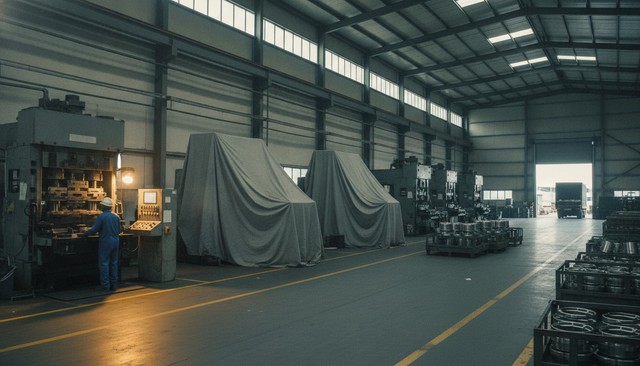
Imported vehicles accounted for 69% of South African new vehicle sales in 2025, while local content in domestically assembled vehicles sat at roughly 38% to 40% against a policy target of 60%. Fifteen component plants have closed in the past two years. The industry is now pressing for faster decisions on the Automotive Production and Development Programme.
Economy and Markets
4 September 2026 • 5 min read
Every percentage point of local content that moves offshore converts inland component freight into imported container freight. The APDP debate is not only an industrial policy question — it is a question about which trade lanes and which vehicles keep working.
Speaking at a Creamer Media webinar on 1 September, National Association of Automotive Component and Allied Manufacturers chief executive Renai Moothilal said localisation has effectively been stuck in the mud for as long as there has been an APDP period. Vehicle assembly volumes have held relatively steady at roughly 500 000 to 600 000 units a year, but recorded local content levels have declined. NAACAM reports 15 component plant closures over the past two years, with 7 500 direct jobs affected by those closures and by reductions in component production lines.
Moothilal's diagnosis is that the current framework has not adequately rewarded higher levels of localisation. NAACAM wants clearer localisation requirements and stronger incentives for the use of locally produced components and raw materials. He also wants a deadline: the industry, he said, should conclude the current round of policy discussions within a year and secure certainty on any changes.
The gap in one line: local content of approximately 38% to 40% against a 60% policy target, with imports taking 69% of domestic new vehicle sales in 2025. (Source: NAACAM via Freight News, 2026)
Toyota Wessels Institute for Manufacturing Studies executive director Justin Barnes offered the counterweight, and it is worth holding onto. He cautioned against reading the declining local content percentage as evidence of widespread delocalisation: the value of locally produced content per vehicle may have risen even while its share of the finished vehicle fell — for instance when a locally assembled export model carries a higher-value imported engine. "The actual local content per manufactured South African vehicle has gone up but the percentage has gone down," he said.
For anyone moving freight, that distinction has a physical meaning. Rising local value per unit against a falling percentage implies a component mix that is heavier on imported high-value assemblies and lighter on locally fabricated content — which shifts weight and volume from inland road and rail movements onto the import container lanes serving the assembly plants. The tonnage does not disappear. It changes origin, mode and border exposure.
Barnes flagged a specific mechanism inside the programme. Vehicle exporters earn rebates against duties on imported vehicles, and manufacturers that do not use all their rebates can sell them to independent importers. Importers acquiring those rebates can reduce their exposure to duties and the ad valorem tax, which he estimated makes their vehicles roughly 4.5% cheaper in the domestic market. "That is a major problem that needs to be corrected," he said.
He also put the tax burden on new vehicles at approximately R130 000 per vehicle sold on average, covering ad valorem tax, VAT, the environmental levy on carbon emissions and the tyre levy — arguing that if government wants more vehicles consumed domestically, it needs to think about how much it taxes them. Metair Investments chief executive Paul O'Flaherty added the supplier view: component makers invest in plants on the basis of volumes forecast by vehicle manufacturers, and when actual production lands substantially below those projections the investment case comes under pressure, compounded by high electricity costs and continuing port and logistics challenges. His complaint was about duration as much as design — the longer the discussion goes on about the next incentives, he said, the less helpful it is.
If your book leans on automotive component runs between suppliers and assembly plants, treat plant-closure news as a leading indicator for lane volume, not an isolated industrial story. A higher imported-content mix moves work toward port-to-plant container haulage and away from inland fabrication circuits — different vehicles, different cycle times, different customers. And note O'Flaherty's naming of port and logistics performance as a cost driver in the investment case: terminal reliability is now being argued in policy rooms as a reason plants do or do not get built.
Stay connected with Southern Africa's freight and transport community.
Join 6,400+ logistics professionals across the SADC region.
Visit Laaimylorrie.com| About the Author | |

|
Andre Klynsmith Entrepreneur & Technology Enthusiast Andre's expertise spans technology, blockchain, transport, and logistics — with a passion for innovation and driving positive change across industries. |
| Source: Freight News View source › | 3 September 2026 |


Subscribe to our Newsletter and stay in the know with all the latest Industry News, Products and Trends covering the whole of the SADC region.
KS Blockchain T/A Laaimylorrie.com . All Rights Reserved.