Industry related headlines to keep you in the know.
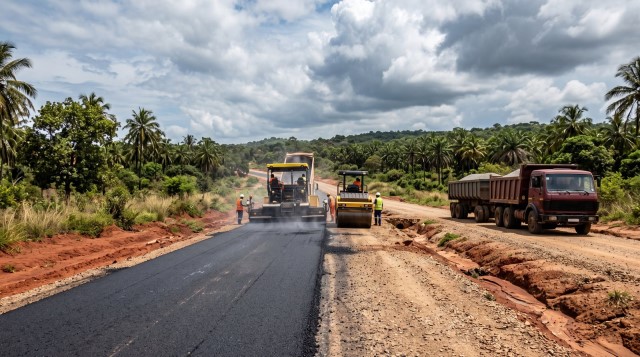
Mozambique's National Roads Administration has opened the procurement process for supervision of "Mais Estradas 2031", a programme to pave 3,219 km of road across 45 separate sections by 2031. The supervision contracts run for 36 months and cover technical, physical and financial monitoring of the sites.
Transportation
30 August 2026 • 4 min read
Mozambique is not building these roads to shorten distances. It is building them so that a route that works in September still works in February. For anyone running Beira, Nacala or Maputo corridor traffic, that is the more valuable outcome.
The Administração Nacional de Estradas (ANE) has launched the process to appoint firms to supervise the works. The 45 sections are spread across Maputo, Gaza, Inhambane, Sofala, Manica, Tete, Zambézia, Nampula, Cabo Delgado and Niassa — effectively the length of the country rather than one favoured region.
Named sections include Chalaua–Moma in Nampula at over 83 km, Mecúfi–Mazeze in Cabo Delgado at over 75 km, and Sitila–Funhalouro in Inhambane and Chitima–Nhabando in Tete, each over 70 km. Supervision covers validation of detailed design studies, monitoring of progress, verification of quantities and certification of services.
Programme scale: 3,219 km across 45 sections in 10 provinces, with 36-month supervision contracts, targeted for completion by 2031. (Source: ANE / Logis-T Africa, 2026)
Corridor conversations in SADC tend to focus on the trunk: the N4 to Maputo, the Beira Corridor, the Nacala line. But the trunk is only as useful as the roads feeding it. A paved secondary route between a production area and a national highway removes detours, reduces vehicle downtime and cuts the maintenance cost that gravel and washaway impose on a fleet.
This matters regionally because Mozambique is the maritime gateway for several landlocked SADC economies. Zimbabwe, Zambia, Malawi and the southern DRC all reach the Indian Ocean through Mozambican territory. Flooding, heavy rainfall and cyclones regularly interrupt that access, and the interruption is rarely announced in advance.
The delivery risk is stated plainly in the programme's own framing: completion depends on the pace of funding mobilisation, execution of the works, and the capacity to maintain the network afterwards. That third condition is the one that has undone comparable programmes across the region. A newly paved section that is not maintained returns to its prior state within a handful of wet seasons.
The appointment of supervision firms on 36-month contracts is a modest signal that ANE intends to hold contractors to specification rather than to certificate. Operators should watch which sections actually reach construction in the first 18 months — that list, not the headline 3,219 km, is the planning input.
Treat this as a five-year reliability signal, not a 2026 routing change. If you run Mozambican legs, identify which of the 45 sections touch your lanes and track their tender awards; a confirmed section gives you a defensible case for tightening wet-season transit commitments from 2029. Until then, keep seasonal contingency in your Mozambique quotes — the announcement changes the outlook, not this summer's rainfall.
Stay connected with Southern Africa's freight and transport community.
Join 6,400+ logistics professionals across the SADC region.
Visit Laaimylorrie.com| About the Author | |

|
Andre Klynsmith Entrepreneur & Technology Enthusiast Andre's expertise spans technology, blockchain, transport, and logistics -- with a passion for innovation and driving positive change across industries. |
| Source: Logis-T Africa View source › | 28 August 2026 |






Subscribe to our Newsletter and stay in the know with all the latest Industry News, Products and Trends covering the whole of the SADC region.
KS Blockchain T/A Laaimylorrie.com . All Rights Reserved.