Industry related headlines to keep you in the know.
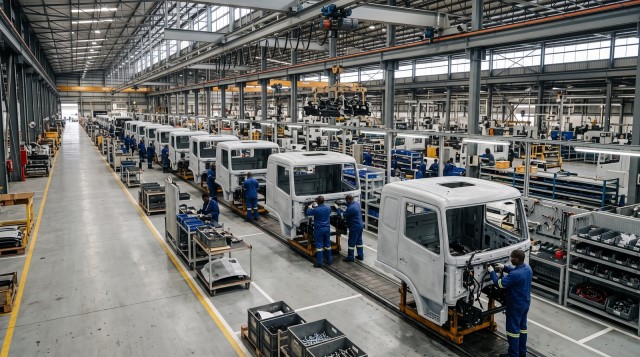
Volvo Trucks South Africa marked 20 years of its Durban assembly plant on 19 August 2026. The plant now builds around 12 units a day — roughly 240 a month — against four a day when it opened in 2006, with rated headroom to 16 a day. For fleet owners across SADC, those production numbers are a procurement input, not a corporate anniversary detail.
ASSET MANAGEMENT
29 August 2026 • 5 min read
Where a truck is assembled affects three things a fleet owner actually pays for: how long you wait for it, which specifications you can realistically get, and how easily you can sell it in four years' time.
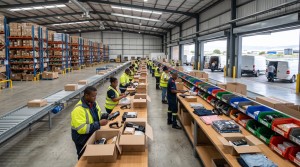
The Umbogintwini facility south of Durban started in 2006 assembling four units a day. Two decades on it produces about 12 units a day, or roughly 240 a month, and is rated to reach 16 a day at full capacity. It has earned Silver Certification from Volvo Trucks in Sweden, an internal quality benchmark, and sits among the group's global assembly plants on production process and quality standards.
Its output mix has also moved upmarket. The plant began assembling Euro 6 and FH Aero models during 2026, bringing the current-generation long-haul specification into local build rather than leaving it as a full import. Volvo's South African battery-electric fleet has meanwhile passed a quarter of a million kilometres in commercial operation.
Capacity headroom: The Durban plant builds about 12 units a day and roughly 240 a month, with rated capacity of 16 units a day — roughly a third more output available without new plant. (Source: Volvo Trucks South Africa, 2026)
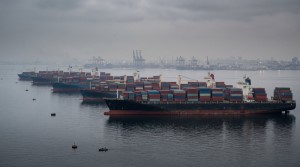
Lead time is the first and most obvious link. A locally assembled unit is scheduled into a build slot measured in weeks; a fully imported unit is scheduled into a shipping window measured in months, and that window has been volatile through 2026 as vessel routing and port performance have swung. For an operator replacing tractors on a rolling cycle, the difference between a 10-week and a 26-week wait is a real financing and utilisation cost.
Specification availability is the second. A plant with capacity headroom can absorb variation — axle configurations, gearbox options, tank sizes, PTO arrangements — without pushing the order into a distant batch. A plant running flat out cannot. Twelve of a rated 16 units a day means there is genuine room for volume orders and spec changes, which is exactly the flexibility a growing fleet needs and rarely gets.
The third link is the one operators discover only at disposal. Used-truck buyers in South Africa, Namibia, Botswana, Zambia and Zimbabwe price parts availability and workshop familiarity into what they will pay. A model that has been assembled locally for years has a deeper parts pipeline, more technicians who have worked on it and more comparable sales to reference. That supports the residual, which is the single largest line in most total-cost-of-ownership calculations after fuel.
This is not an argument for one brand. It is an argument for treating assembly location as a scored criterion in fleet procurement, the same way payload, fuel consumption and service network already are. Several manufacturers assemble or partially assemble in South Africa, and the sensible exercise is to compare them on the same basis rather than to assume the badge settles the question.
The practical test is straightforward. For each shortlisted model, ask: where is it built, what is the quoted lead time to your yard, which specification options are actually available in that build slot, where is the nearest parts depot, and what did comparable four-year-old units of that model fetch at auction in the past twelve months. Those five answers will separate two trucks with near-identical brochure figures.
Add assembly location to your procurement scorecard alongside payload, consumption and service network. Ask every supplier for quoted lead time to your yard, in-slot specification availability and recent four-year-old resale evidence — those three answers move total cost of ownership more than most brochure differences do.
Stay connected with Southern Africa's freight and transport community.
Join 6,400+ logistics professionals across the SADC region.
Visit Laaimylorrie.com| About the Author | |

|
Andre Klynsmith Entrepreneur & Technology Enthusiast Andre's expertise spans technology, blockchain, transport, and logistics -- with a passion for innovation and driving positive change across industries. |
| Source: Dealerfloor View source › | 20 August 2026 |


Subscribe to our Newsletter and stay in the know with all the latest Industry News, Products and Trends covering the whole of the SADC region.
KS Blockchain T/A Laaimylorrie.com . All Rights Reserved.