Industry related headlines to keep you in the know.
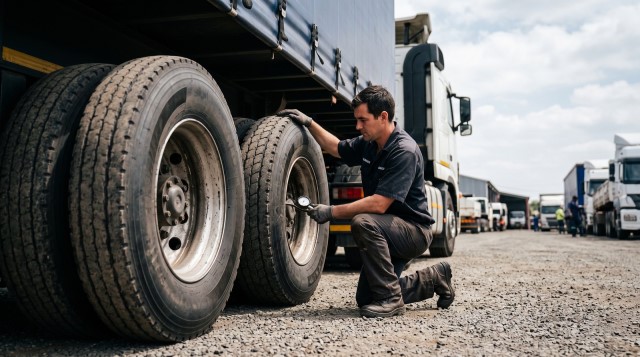
Tyres are the second-highest variable cost in a long-distance trucking operation after fuel — a set of 20 on a six-axle rig runs about R132,000 — yet they remain one of the most under-managed line items on the SADC fleet balance sheet in 2026.
Fleet Management
1 August 2026 • 4 min read
With fuel volatile and margins thin, the tyre is the one major cost operators can actually control day to day. Managed well, it stretches kilometres and cuts fuel burn. Ignored, it quietly bleeds a fleet.
Fuel dominates the conversation about running costs, and rightly so — it typically accounts for 35–45% of a truck's operating cost. But tyres sit right behind it as the second-largest variable expense, and unlike fuel, tyre life is heavily within an operator's control. On cross-border long-haul work, tyres commonly cost R0.80–R1.50 per kilometre, and a fresh set of 20 on a six-axle articulated combination is a R132,000 outlay.
Those numbers make tyre management a margin decision, not a maintenance afterthought. A fleet that squeezes an extra 15–20% of life out of each casing, and retreads suitable carcasses instead of scrapping them, changes its cost per kilometre in a way that shows up directly on the bottom line.
The number: Tyres are the second-highest variable cost in long-haul trucking — around R0.80-R1.50 per kilometre, with 20 new tyres on a six-axle rig costing about R132,000. (Source: Focus on Transport & Logistics, 2026)
The biggest wins are also the cheapest. Incorrect inflation is the single largest destroyer of tyre life and a direct drag on fuel economy — an under-inflated tyre increases rolling resistance, raises consumption and wears unevenly. Poor wheel alignment does the same, scrubbing rubber off the shoulders and pulling the truck slightly off-line, which the engine pays for in extra fuel over every kilometre.
This is why tyre and fuel management cannot be separated. Harsh braking and speeding accelerate wear on tyres and brakes while burning more diesel; disciplined driving protects both. A structured programme of regular pressure checks, alignment, rotation and driver coaching attacks the two largest variable costs at once.
A workable policy does not need expensive systems to start. Set a fixed pressure-check interval, record tread depth per position, budget for scheduled alignment, and define a clear retread and scrap standard so casings are recovered before they are ruined. Telematics and tyre-pressure monitoring add early warning, but the discipline of measuring and recording is what turns tyres from a surprise invoice into a predictable, managed cost.
For SADC operators running long distances over mixed road conditions and hot climates, the payoff is real: longer casing life, fewer roadside failures, better fuel numbers, and a lower cost per kilometre on the exact routes where competition is fiercest.
Treat tyres as a controllable margin lever, not a grudge purchase. A simple policy of regular pressure checks, alignment, rotation, retreading and driver coaching lowers cost per kilometre and cuts fuel burn at the same time — the cheapest saving available to a fleet in 2026.
Stay connected with Southern Africa's freight and transport community.
Join 6,400+ logistics professionals across the SADC region.
Visit Laaimylorrie.com| About the Author | |

|
Andre Klynsmith Entrepreneur & Technology Enthusiast Andre's expertise spans technology, blockchain, transport, and logistics — with a passion for innovation and driving positive change across industries. |
| Source: Focus on Transport & Logistics / FAW Trucks Southern Africa View source › | 1 August 2026 |





Subscribe to our Newsletter and stay in the know with all the latest Industry News, Products and Trends covering the whole of the SADC region.
KS Blockchain T/A Laaimylorrie.com . All Rights Reserved.