Industry related headlines to keep you in the know.
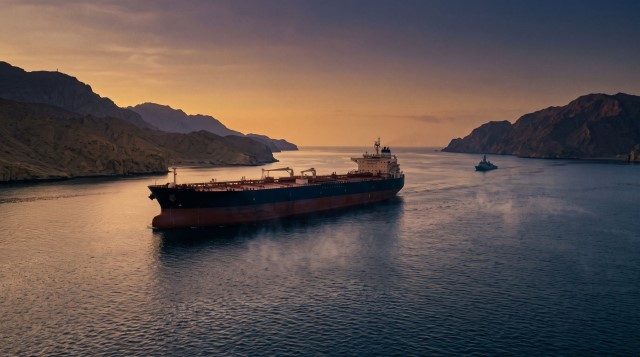
Iran's toll system for vessels crossing the Strait of Hormuz has moved into full operation, with ships now reportedly charged between US$1.5 million and US$2 million per crossing. For SADC operators, a chokepoint that was a war headline a month ago has quietly become a standing cost line that flows straight into the price of diesel.
SHIPPING AND LOGISTICS
23 July 2026 • 6 min read
A shooting war grabs attention and then fades from the news. A toll does not. The shift from a closed strait to a charged one turns a one-off shock into a permanent premium on Gulf energy — and Southern Africa pays for that premium at the pump.
Earlier in 2026 the Strait of Hormuz was closed and reopened repeatedly as fighting flared between Iran, Israel and the United States. A 60-day toll-free interim arrangement was meant to steady the waterway, but it did not hold; within days the arrangement frayed, the strait was again declared closed and strikes resumed. What has followed is arguably more consequential for logistics than the fighting itself: reports that Iran is now charging vessels to pass, with fees scaled to ship size, cargo type and volume and settled in cash, cryptocurrency or barter through intermediaries.
The politics around it remain unresolved. The United States has floated providing protection through the strait in exchange for a fee on cargo moving through it, and the International Maritime Organization has publicly opposed transit charges on a waterway that international law treats as open. However that argument settles, the practical position for a shipper is simpler: the cost and risk of moving energy through Hormuz has gone up and is not going back to zero soon.
The number: Vessels transiting the Strait of Hormuz are reportedly being charged US$1.5 million to US$2 million per crossing under Iran's now-operational toll regime — a corridor through which roughly a fifth of the world's oil trade moves. (Source: Kurdistan24 / CNBC / IMO, July 2026)
Southern Africa is a net importer of refined fuel, and a large share of the crude and product that ultimately fills the region's tanks originates in or passes near the Gulf. When the cost of moving that energy rises — whether through insurance, war-risk premiums or an outright toll — it is absorbed into the landed price of diesel and petrol long before it reaches a depot in Windhoek, Walvis Bay or Gauteng. A structural premium on Hormuz therefore acts as a floor under the fuel price, working against the recent run of pump-price relief rather than with it.
There is a routing dimension too. Every episode of Gulf and Red Sea disruption pushes more long-haul traffic around the Cape of Good Hope, sustaining the bunkering and transhipment demand that has been building at Southern African ports. That is an opportunity for the region's maritime economy, but for a road haulier it mostly reads as continued volatility in fuel and ocean-freight costs rather than a windfall.
The instinct during the worst of the fighting was to treat Hormuz as a temporary emergency to be waited out. The more useful posture now is to treat it as a persistent cost factor to be budgeted. That means building a wider fuel-price band into 2026 route costings, keeping fuel-adjustment clauses in customer contracts current and specific, and resisting the temptation to pass on the full benefit of any month's pump-price cut when the underlying energy risk is still elevated.
For freight forwarders and importers, the same logic applies to the ocean leg. A re-monetised chokepoint feeds through into war-risk insurance, bunker adjustment factors and carrier surcharges that can outlast the news cycle that produced them. Reconfirming freight validity and surcharge exposure before committing to a landed cost is no longer a cautious habit; it is the difference between a quoted margin and a real one.
Treat the Hormuz toll as a standing fuel-cost risk, not a passing crisis. Widen the fuel band in your route costings, keep a transparent fuel-adjustment clause in every contract, and hold back part of any pump-price cut to rebuild margin while the Gulf premium persists.
Stay connected with Southern Africa's freight and transport community.
Join 6,400+ logistics professionals across the SADC region.
Visit Laaimylorrie.com| About the Author | |

|
Andre Klynsmith Entrepreneur & Technology Enthusiast Andre's expertise spans technology, blockchain, transport, and logistics — with a passion for innovation and driving positive change across industries. |
| Source: Kurdistan24 / CNBC / IMO View source › | 13 July 2026 |





Subscribe to our Newsletter and stay in the know with all the latest Industry News, Products and Trends covering the whole of the SADC region.
KS Blockchain T/A Laaimylorrie.com . All Rights Reserved.