Industry related headlines to keep you in the know.
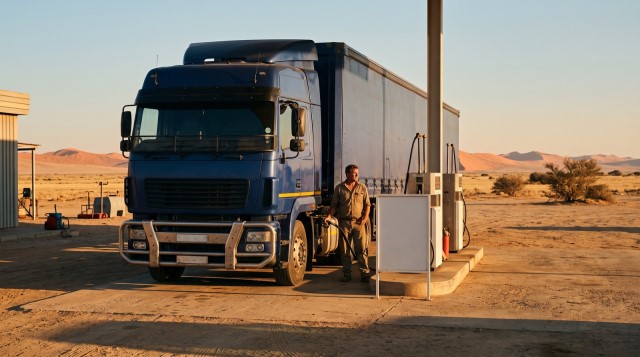
Namibia has cut the price of diesel by N$4.00 a litre and petrol by N$1.00 a litre from 3 July 2026, handing transport operators their most meaningful fuel relief in more than a year.
Economy and Markets
16 July 2026 • 4 min read
For a sector where fuel is the single largest controllable cost, a N$4 diesel cut is not small change. On a long-haul rig burning thousands of litres a month, this month's adjustment quietly restores margin that had been eroding since the Middle East oil spike.
The Ministry of Industries, Mines and Energy reduced all diesel grades by N$4.00 per litre and petrol by N$1.00 per litre with effect from midnight on 3 July. At Walvis Bay — the reference point for most import cargo — petrol 95 now sits at roughly N$22.48 a litre, diesel 50ppm at about N$24.26, and diesel 10ppm at around N$24.36.
Because Namibian pump prices are inland-adjusted, operators running to Windhoek, the north or across the borders pay a little more per litre than the coast — but the size of the cut is the same everywhere. For diesel-heavy fleets, that is the number that matters.
Pump impact: Diesel down N$4.00/litre, petrol down N$1.00/litre — Walvis Bay diesel 50ppm now around N$24.26/litre. (Source: Ministry of Industries, Mines and Energy / The Brief, July 2026)
Three forces lined up in operators' favour. International oil prices fell sharply after tensions in the Middle East eased and the earlier disruption to shipping through the Strait of Hormuz unwound. Tanker freight rates softened as global fuel supply improved. And a firmer Namibia dollar reduced the local cost of every imported litre.
That combination pulled down the landed cost of fuel enough for the ministry to pass a substantial reduction through to the pump rather than parking it in the price-stabilisation buffer. It is a direct reversal of the pressure that pushed diesel sharply higher earlier in the year.
The caution is that fuel relief driven by geopolitics can reverse just as quickly. Oil markets remain sensitive to any renewed flare-up around the Gulf, and a weaker rand-linked Namibia dollar could claw back part of the gain within a cycle or two. The buffer account that smooths these swings only has so much room.
For now, though, the arithmetic is clearly better than it was in the second quarter, and operators who priced contracts off the higher diesel level are suddenly carrying more headroom on every load.
Recalculate your cost-per-kilometre now and decide deliberately whether to bank the saving or pass it on to win volume. Treat the cut as a temporary tailwind, not a new baseline — build a diesel assumption into your rates that survives the next upward cycle, and use the breathing room to strengthen your margin rather than assuming it is permanent.
Stay connected with Southern Africa's freight and transport community.
Join 6,400+ logistics professionals across the SADC region.
Visit Laaimylorrie.com| About the Author | |

|
Andre Klynsmith Entrepreneur & Technology Enthusiast Andre's expertise spans technology, blockchain, transport, and logistics — with a passion for innovation and driving positive change across industries. |
| Source: The Brief Namibia View source › | 16 July 2026 |


Subscribe to our Newsletter and stay in the know with all the latest Industry News, Products and Trends covering the whole of the SADC region.
KS Blockchain T/A Laaimylorrie.com . All Rights Reserved.