Industry related headlines to keep you in the know.
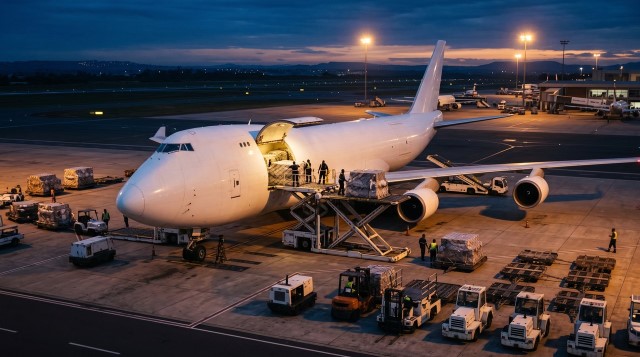
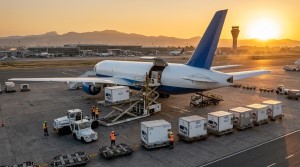
A wave of new air cargo routes and freighter acquisitions in early 2026 is widening the connections between Southern Africa and the rest of the world — and giving SADC exporters more ways to move time-sensitive goods by air.
Aviation
21 May 2026 • 5 min read
Africa's air cargo growth story has been about volume. The next chapter is about connectivity — Gulf carriers adding African destinations, African operators buying their own freighters, and new lanes opening that did not exist a year ago.
Among the most significant moves for the SADC region, Etihad Airways has announced an expansion of its Africa network from its Abu Dhabi hub, adding routes to the Democratic Republic of the Congo, Eritrea, Ghana, Nigeria and Zimbabwe. For two SADC member states — the DRC and Zimbabwe — this means a direct line into one of the world's largest cargo transhipment hubs, and from there onward access to Asia, Europe and the Americas.
Gulf hubs have become central to global air cargo because they pair belly capacity on passenger flights with dedicated freighter fleets. When a carrier adds a SADC city to that network, exporters of perishables, pharmaceuticals and high-value manufactured goods gain a faster, more frequent path to market without needing to truck cargo to Johannesburg first.
Industry figure: African airlines have recorded the strongest air cargo demand growth of any region for five consecutive months, with the Africa–Asia trade lane surging 61.9% year on year in February 2026. (Source: IATA, 2026)
The expansion is not only being driven from outside the continent. Air Ghana took delivery of a Boeing 737-400 freighter in early May 2026 to strengthen cargo links across West Africa, and Royal Air Maroc Cargo launched a weekly Boeing 767 freighter service between Casablanca and Dakar. Air Bonanza Express has leased additional freighter aircraft earmarked for intra-Africa and Africa–Asia flying.
Each of these decisions chips away at one of African air cargo's oldest weaknesses: thin intra-continental connectivity. As more operators add freighter capacity, the cost and unpredictability of moving cargo between African cities should ease — an indirect but real benefit for SADC shippers who currently route regional cargo through distant hubs.
The momentum is real, but so are the constraints. Industry bodies continue to warn that strong demand growth sits alongside persistent structural challenges — marginal airline profitability, uneven ground infrastructure, and slow progress on liberalising African skies. Capacity has also not always kept pace with demand, tightening space on the busiest lanes.
For SADC operators, the practical takeaway is that more routes do not automatically mean cheaper or guaranteed space. Air freight remains a premium mode best matched to cargo where speed genuinely pays — and securing capacity early on popular lanes is becoming a competitive skill in its own right.
The air freight map is opening up: new Gulf and African routes give SADC exporters faster paths to global markets, especially from the DRC and Zimbabwe. Freight forwarders should map these new lanes into their service options, book capacity ahead on high-demand routes, and reserve air freight for cargo where transit speed protects value.
Stay connected with Southern Africa's freight and transport community.
Join 6,400+ logistics professionals across the SADC region.
Visit Laaimylorrie.com| About the Author | |

|
Andre Klynsmith Entrepreneur & Technology Enthusiast Andre's expertise spans technology, blockchain, transport, and logistics — with a passion for innovation and driving positive change across industries. |
| Source: Air Cargo News / Air Cargo Week View source › | 21 May 2026 |


Subscribe to our Newsletter and stay in the know with all the latest Industry News, Products and Trends covering the whole of the SADC region.
KS Blockchain T/A Laaimylorrie.com . All Rights Reserved.