Industry related headlines to keep you in the know.
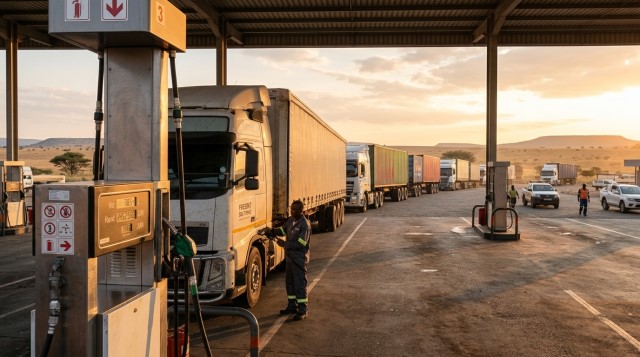
South African diesel prices will jump by approximately R4.10 per litre from Wednesday, 6 May 2026, lifting wholesale diesel into the R29-R30 range and pushing pump prices for many fleets between R32 and R33 per litre. For SADC freight operators that buy fuel inside South Africa or settle invoices in rand-denominated terms, this is the second hit in two months — and the underlying driver is geopolitics, not local pricing policy.
ECONOMY AND MARKETS
2 May 2026 • 5 min read
Persistent disruption across the Strait of Hormuz is keeping global crude prices elevated, and South Africa's May 2026 fuel review is the most direct read-through to the SADC freight cost base. Even with National Treasury cutting the diesel general fuel levy to R0.00 for May, the underlying basic-fuel-price increase still pushes diesel up by roughly R4.10 per litre — and the levy relief halves in June and ends in July.
Forecast figures from the Department of Mineral and Petroleum Resources point to wholesale diesel rising to about R29.35 at the coast and just over R30 inland, with retail margins lifting pump prices for many fleet buyers into the R32-R33 range. Petrol 95 will rise by approximately R2.09 per litre, taking coastal pump prices for petrol to roughly R24.38 and inland Gauteng to around R25.21. The increase takes effect from Wednesday 6 May 2026.
The cushion in the May review is the general fuel levy. National Treasury has dropped the diesel general fuel levy from R0.93 per litre to R0.00 per litre for May 2026 as part of an extended short-term relief package. That softens the May shock but is explicitly a transitional measure: the relief is halved for June and is scheduled to fall away entirely from July 2026, at which point the levy returns to its previous baseline.
Headline number: Diesel up R4.10/litre from 6 May 2026 — even after the diesel general fuel levy is cut to R0.00 for May. June halves the relief; July restores the full levy. (Source: National Treasury short-term relief notice and BusinessTech, April 2026)
Roughly a fifth of global oil supply still passes through the Strait of Hormuz, and even partial disruption pushes Brent benchmarks higher and lengthens shipping insurance premiums. South Africa imports virtually all its refined diesel, and Namibia, Botswana, Zimbabwe and Zambia are exposed to the same global price signal — typically with a layered margin on top because of corridor-specific costs.
That is exactly why Zimbabwe has slipped into being SADC's second most expensive fuel market this April, why Namibia's Road Fund is debating whether to lift its fuel levy, and why Zambian and DRC importers have started locking in slot-based fuel contracts rather than relying on spot. May's South African review is the latest reminder that the SADC freight cost base now moves with Hormuz, not with local pricing policy.
Three actions matter most. First, model your June and July cost base now — not just May. The diesel levy relief halves in June and ends in July; for a long-haul fleet doing 20,000 litres a month, that is roughly R9,300 in additional levy from June and R18,600 from July, before any further basic-fuel-price moves. Second, refresh your fuel surcharge clauses with shippers; many SADC contracts still index off a quarterly average, and the underlying pace of change has accelerated meaningfully since the Iran war began. Third, tighten fuel-theft controls — smart tank sensors, AI exception flags and electronic fuel cards are now paying for themselves inside one quarter on most long-haul fleets.
For cross-border operators, the May 2026 hike is also a useful trigger to revisit corridor cost models. Walvis Bay-based fleets servicing the Copperbelt have a different fuel exposure profile to Durban-Lubumbashi runs, and the gap is widening as carriers reshuffle their port rotations. Operators who can rebalance lanes toward the most fuel-efficient routings will protect more margin than those who simply pass through every basic-fuel-price move.
The headline R4.10 May 2026 diesel hike is only the visible part of the cost shock. The bigger story is the staged removal of the levy relief and the structural exposure of SADC fuel pricing to the Strait of Hormuz. Fleets that re-baseline contracts, stress-test their June and July cost models and lock in fuel-management technology now will hold their margins through the transition; those that rely on quarter-end averages will be caught short.
Stay connected with Southern Africa's freight and transport community.
Join 6,400+ logistics professionals across the SADC region.
Visit Laaimylorrie.com| About the Author | |

|
Andre Klynsmith Entrepreneur & Technology Enthusiast Andre's expertise spans technology, blockchain, transport, and logistics — with a passion for innovation and driving positive change across industries. |
| Source: BusinessTech & National Treasury short-term relief notice View source › | 2 May 2026 |


Subscribe to our Newsletter and stay in the know with all the latest Industry News, Products and Trends covering the whole of the SADC region.
KS Blockchain T/A Laaimylorrie.com . All Rights Reserved.