Industry related headlines to keep you in the know.
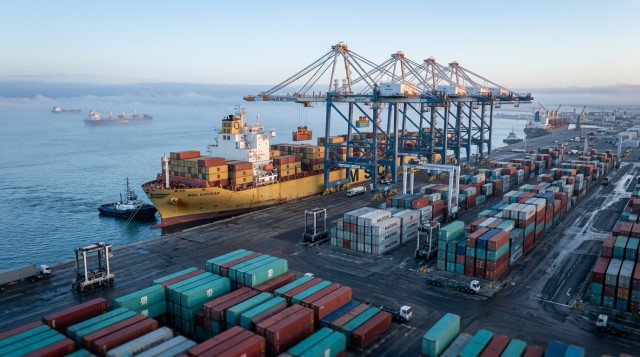
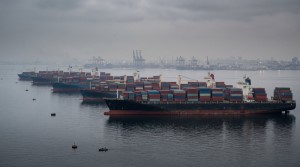
MSC, the world's largest container line, has rebuilt its Africa Service network for May 2026 — and the changes carry direct consequences for SADC importers, exporters and freight forwarders. Walvis Bay has been added to the regional rotation while Ngqura has been dropped, and the Mozambique Shuttle has been extended north to include Dar es Salaam and Mombasa.
SHIPPING AND LOGISTICS
2 May 2026 • 5 min read
MSC's May 2026 network reshuffle confirms what SADC shippers have been pricing into their plans for two years: container capacity is moving away from congested South African hubs and onto faster, more reliable Atlantic and Indian Ocean rotations. The decision to upgrade Walvis Bay's status while retiring an Ngqura call signals where the world's biggest carrier sees regional volume going next.
Two structural shifts stand out. First, MSC's Mozambique Shuttle — until recently a Maputo-Beira-Durban triangle — has been extended further up the East African coast to Dar es Salaam and Mombasa. That gives shippers a single carrier service stitching together five SADC and East African Community ports, and it opens new direct routings for Zambian, Malawian, DRC and Zimbabwean cargo using Beira as the inland gateway.
Second, on the Atlantic side, Walvis Bay has replaced Ngqura in MSC's revised regional schedule. With Terminal Investment Namibia's six new RTG cranes commissioned at Walvis Bay in late April 2026 and the Lüderitz expansion underway, Namibia's Atlantic gateway has the equipment, depth and concession backing to handle higher-frequency mainline calls. Ngqura — South Africa's deepest port — keeps its transshipment role but loses some of its direct mainline traffic to Walvis Bay in this rotation.
Why the change matters: Walvis Bay sits 7 days closer to Kolwezi (DRC) and 4 days closer to the Zambian Copperbelt than Durban — and the new MSC rotation amplifies that geographic advantage by collapsing the trans-shipment leg. (Source: Container News & Lobito Atlantic Railway transit data, 2026)
The MSC decision is the clearest signal yet that the long-running diversification away from Durban is being institutionalised by mainline carriers, not just by individual shippers. Recurring berth delays, vessel waiting times and congestion at Durban's Pier 2 have pushed forwarders to rebuild their Atlantic and Indian Ocean alternatives — and Walvis Bay has emerged as the primary winner. Six new RTG cranes, a 17-metre channel, the TIN concession, the Farm 39 North Port masterplan and the Lobito Corridor's first commercial flows all converged at the same time.
For MSC, the calculus is simple: it can run a single Africa rotation that touches Walvis Bay, Maputo, Beira, Dar es Salaam and Mombasa, while still maintaining mainline coverage at Durban via separate strings. Shippers servicing the Copperbelt, the DRC and northern Zambia get a faster Atlantic option. Shippers serving Zimbabwe and Malawi get a cleaner Beira routing. South Africa's east-coast exporters retain their established networks but lose their de facto monopoly on regional gateway traffic.
The new rotation is going to change three things very quickly. Routing decisions will start to shift, with Trans-Caprivi and Trans-Kalahari traffic gaining new weight on imports landed at Walvis Bay rather than Durban. Spot-rate spreads between Atlantic and east-coast SADC services are likely to compress as carriers compete for the new flows. And inland clearance pressure will move with the cargo: bonded warehouses, customs agents and trucking capacity at Walvis Bay, Beira and Maputo all need to scale up to absorb volumes that previously flowed through Durban and Ngqura.
For SADC freight operators with an eye on Q3 2026, this is the strategic moment. Carriers usually settle into their new rotations within two service cycles. Operators who lock in Walvis Bay-Copperbelt or Beira-Harare backhaul lanes now will be in a stronger position than those waiting to see how the new flows shake out.
Mainline carrier rotations rarely shift this materially in a single cycle — and when they do, fleet positioning, customs capacity and inland infrastructure usually take 12 to 18 months to catch up. SADC operators servicing Atlantic-side cargo should review their Walvis Bay-Lusaka, Walvis Bay-Lubumbashi and Beira-Harare lanes now; carriers reward early committers with capacity guarantees, and the May 2026 reshuffle is the first time in a decade Walvis Bay has been priced as a primary regional hub by a top-three global line.
Stay connected with Southern Africa's freight and transport community.
Join 6,400+ logistics professionals across the SADC region.
Visit Laaimylorrie.com| About the Author | |

|
Andre Klynsmith Entrepreneur & Technology Enthusiast Andre's expertise spans technology, blockchain, transport, and logistics — with a passion for innovation and driving positive change across industries. |
| Source: Container News View source › | 2 May 2026 |





Subscribe to our Newsletter and stay in the know with all the latest Industry News, Products and Trends covering the whole of the SADC region.
KS Blockchain T/A Laaimylorrie.com . All Rights Reserved.