Industry related headlines to keep you in the know.
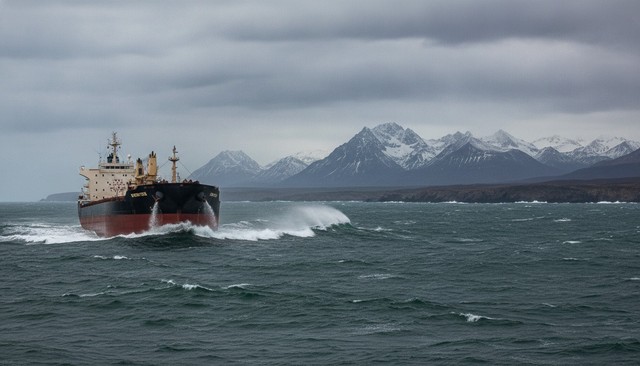
Marine insurer the Swedish Club has warned members that Cape Horn and the Strait of Magellan are not straightforward substitutes for a tightening Panama Canal, in a member alert issued as water restrictions bite and the Suez, Red Sea and Hormuz alternatives all remain compromised.
Supply Chain Management
15 September 2026 • 3 min read
The Club's framing is the part worth keeping. Owners are looking at the southern tip of South America, it said, “not because it has become attractive” but because the alternatives have become harder. That sentence describes the whole 2026 routing map — and it is why the Cape of Good Hope still matters even as carriers drift back to Suez.
Panama's restrictions are being driven by a strengthening El Niño and a growing water deficit. Rainfall across the canal watershed from May through August has run about 34% below historical averages, while inflows have been roughly 44% below normal. The Panama Canal Authority has progressively reduced the maximum Neopanamax draft to 48 feet of tropical fresh water and cut transit slots to conserve water. A further reduction to 47.5 feet, planned for 1 October, was postponed this month after a review of Gatun Lake levels.
Capacity is tightening too. Neopanamax slots were cut to nine a day from 3 September, while Panamax capacity was set at 25 daily slots and scheduled to fall to 23 on 15 September. At the same time the canal has been busier, not quieter: before the Iran war it handled roughly 34 ships a day, and traffic later climbed as high as 40 to 41 vessels a day as tonnage shifted away from the Suez and Hormuz routes.
Less water, more ships: Panama watershed rainfall about 34% below average and inflows about 44% below normal from May to August, with Neopanamax slots cut to nine a day from 3 September — while daily traffic has run as high as 40 to 41 vessels. (Source: Swedish Club member alert via gCaptain, 2026)
Two passages exist around the bottom of South America, and neither is a lock transit on a timetable. The Drake Passage offers a direct open-ocean run between the Atlantic and Pacific but exposes ships to some of the harshest weather in commercial shipping, with heavy seas, violent vessel motion, slamming, cargo shift and machinery strain. The Strait of Magellan is more sheltered but brings narrow channels, strong currents and restricted water.
The commercial traps sit in the detail. Pilotage through the Magellan is generally compulsory under Chilean regulations, with an exception between Bahía Félix and Punta Arenas for vessels making an ocean-to-ocean transit without calling at a Chilean port. Chilean authorities still strongly recommend a pilot there for tankers and passenger ships. Where a charterparty makes charterers responsible only for compulsory pilotage, the cost of a voluntary pilot can land on owners, and the Club noted there is no settled rule. It also flagged bunker handling on ships not designed for prolonged cold-weather operation, and the thin salvage and emergency response cover across southern Chile.
The Club's conclusion is that for most vessels the current Panama restrictions remain manageable and do not on their own justify the extra risk of rounding Cape Horn. That judgement changes if the canal tightens further, and Panama officials have warned that the developing El Niño could bring an extended stretch of below-normal rainfall into 2027.
Seen from Walvis Bay or Durban, the comparison is instructive. The Cape of Good Hope is the one long-way-round option with real ports, bunkers, repair capacity, chandlery and salvage resources sitting behind it. Cape Horn has almost none of that. Whatever happens to the Suez balance in the months ahead, the structural case for Southern African port capability is not a story about diverted container volumes — it is that the region is the only detour on the map with infrastructure attached.
If you buy or sell on terms that leave routing open, settle who carries the cost of a routing change before the voyage starts — pilotage, bunkers, delay and additional premium. Ask your forwarder which chokepoint each shipment depends on, because a single answer of “it is on the water” is no longer useful when three waterways are restricted at once. And for exporters into the Americas, check whether your service is draft-limited at Panama before you plan a heavy load.
Stay connected with Southern Africa's freight and transport community.
Join 6,400+ logistics professionals across the SADC region.
Visit Laaimylorrie.com| About the Author | |

|
Andre Klynsmith Entrepreneur & Technology Enthusiast Andre's expertise spans technology, blockchain, transport, and logistics — with a passion for innovation and driving positive change across industries. |
| Source: gCaptain View source › | 14 September 2026 |


Subscribe to our Newsletter and stay in the know with all the latest Industry News, Products and Trends covering the whole of the SADC region.
KS Blockchain T/A Laaimylorrie.com . All Rights Reserved.