Industry related headlines to keep you in the know.
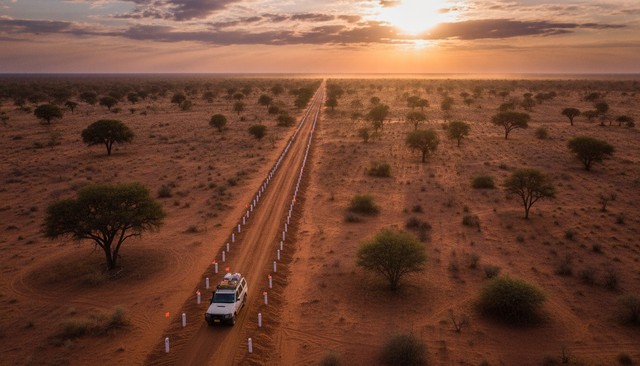
Botswana and Namibia have moved the Trans-Kalahari Railway towards procurement after completing the latest feasibility study, and in doing so have swapped an engineering question for a financial one that published cost estimates put anywhere between US$8 billion and US$16 billion.
Railway
14 September 2026 • 4 min read
Proving a railway can cross the Kalahari was never the hard part. The question now is whether lenders, freight customers and two governments can agree on a concession that survives investor scrutiny — and until they do, road remains the corridor's only working link to Walvis Bay.
The bilateral agreement underpinning the project was signed in March 2014. An international Expression of Interest process followed in September 2023, and in March 2025 Botswana confirmed that CPCS Transcom UK had been appointed to carry out the latest feasibility study. That work was completed in July 2026 and has since been considered by the two governments through their Joint Ministerial Committee.
The route would connect Botswana's mineral-producing regions to the Port of Walvis Bay, giving a landlocked economy a westward rail outlet to the Atlantic that does not pass through South African ports. Published descriptions place the corridor at roughly 1 500 to 1 850 kilometres, with the variation depending on how much existing network and required upgrade is counted inside the project boundary.
The cost gap: Infrastructure procurement reporting puts the railway at about US$8 billion; Botswana reporting after the feasibility study cites roughly US$16 billion, or about P220 billion. The final study has not been published. (Source: Highways.today, 2026)
A twofold difference between published capital cost estimates is not routine early-stage variation. It may reflect different route definitions, different infrastructure scope, escalation, port or supporting works, or assumptions introduced during the study itself. Without publication of the final document, attributing it to any single cause is speculation — which is precisely why the study's release matters more than any ceremonial milestone.
Higher capital expenditure has to be recovered somewhere: greater freight volumes, higher tariffs, a longer concession period, more government support, or some combination. The governments are pursuing a public-private partnership concession rather than conventional state-funded construction, with earlier procurement documentation envisaging private participation across funding, design, construction, ownership and operation before eventual transfer. That structure only works if the traffic forecast holds.
Coal at Mmamabula and elsewhere was the original rationale. The freight proposition has since widened to copper, iron ore, petroleum products, cement and containerised cargo. A broader base reduces single-commodity exposure, but a diversified heavy-haul railway still needs anchor volumes to carry its fixed costs, and prospective cargo is not the same thing as contracted cargo. Mining projects run on their own schedules and commodity markets move.
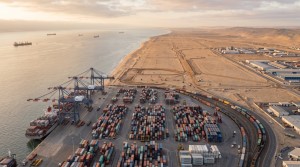
At the Atlantic end, Botswana already holds a logistics position at Walvis Bay through Sea Rail Botswana, a wholly owned Botswana Railways subsidiary operating dry-port, container, vehicle and warehousing capacity. Namport's long-term plans for the North Port envisage substantially expanded bulk handling. Each investment is easier to justify if the other proceeds — which is also the risk if they are developed on different timelines.
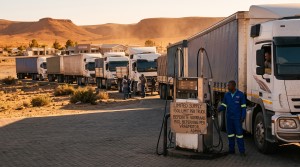
There is no construction start date, so plan the next five years on the existing Trans-Kalahari road corridor rather than on rail that has not been financed. Treat publication of the final feasibility study — not a procurement announcement — as the signal worth acting on, and watch whether anchor freight customers sign volume commitments, because that is what converts a study into a railway.
Stay connected with Southern Africa's freight and transport community.
Join 6,400+ logistics professionals across the SADC region.
Visit Laaimylorrie.com| About the Author | |

|
Andre Klynsmith Entrepreneur & Technology Enthusiast Andre's expertise spans technology, blockchain, transport, and logistics — with a passion for innovation and driving positive change across industries. |
| Source: Highways.today View source › | 11 September 2026 |


Subscribe to our Newsletter and stay in the know with all the latest Industry News, Products and Trends covering the whole of the SADC region.
KS Blockchain T/A Laaimylorrie.com . All Rights Reserved.