Industry related headlines to keep you in the know.
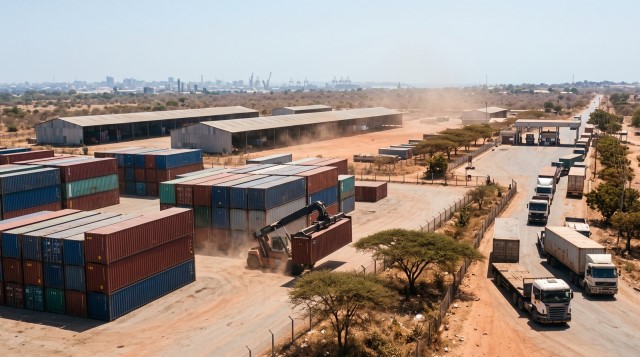
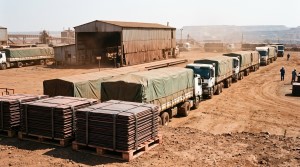
The Democratic Republic of Congo has begun preparations to build its own dry port in Dar es Salaam, President Félix Tshisekedi confirmed during talks with President Samia Suluhu Hassan in Zanzibar on 18 August 2026. The facility is intended to provide customs, cargo handling, mineral certification and quality-control services for Congolese cargo moving through Tanzania.
WAREHOUSING AND STORAGE
29 August 2026 • 5 min read
The DRC already moves about 7.2 million tonnes of cargo through Tanzanian ports a year. A dedicated inland terminal changes where that cargo waits, who certifies it, and how long the clock runs before it reaches a vessel.
The two presidents agreed on 18 August 2026 in Zanzibar to accelerate transport and trade projects aimed at cutting the time and cost of moving goods between the two countries. The DRC is already one of the largest users of Tanzanian ports, with about 7.2 million tonnes of cargo handled in 2025 according to Tanzania's State House.
Tanzania is simultaneously upgrading its Lake Tanganyika ports, increasing vessel numbers and extending its railway network westwards. Projects spanning the standard gauge railway, TAZARA, road upgrades and water transport were all identified as levers to expand commercial links. Trade in goods remains lopsided — Tanzania exported 795 billion Tanzanian shillings to the DRC in 2025 against imports of 24 billion — but the transit business is the larger economic story.
Transit volume at stake: About 7.2 million tonnes of DRC cargo passed through Tanzanian ports in 2025, making the DRC among the largest users of Tanzania's port system. (Source: Tanzania State House / The Chanzo, 2026)
The four functions named for the facility — customs, cargo handling, mineral certification and quality control — are all storage-layer services. They determine how long a consignment sits, under whose control, and what has to happen to it before it can move. Concentrating them in one dedicated site changes the shape of the dwell curve rather than the length of the road.
Mineral certification is the item worth watching most closely. Certification and quality control of copper and cobalt consignments currently happen at varying points along the corridor, and a dedicated facility at the seaport end means cargo can be prepared, verified and documented in a single controlled location rather than at multiple handoffs. For consignments where assay disputes and documentation gaps routinely add days, that consolidation is the substantive gain.
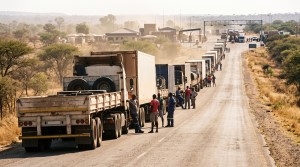
Copperbelt cargo has a genuine choice of routes: Dar es Salaam via the Central Corridor or TAZARA, Beira and Nacala to the east, Durban to the south, and Walvis Bay or Lobito to the west. Those corridors compete on total landed cost and on predictability, and the storage and certification layer is one of the least-examined parts of that comparison.
A dedicated DRC facility at Dar es Salaam does not shorten the road from Kolwezi. It does potentially shorten the tail — the time between arriving at the coast and getting onto a vessel. For operators quoting western and southern routings, that is the number to interrogate: not the corridor's headline kilometres, but the certified dwell at the seaport end, where a genuinely bonded and purpose-built facility can save more time than a faster truck.
The commercial reading is that the DRC is buying control rather than distance. Owning the terminal that handles your cargo means owning the queue, the certification process and the release decision. Operators serving Congolese shippers should expect documentation and certification requirements at the coastal end to become more formalised as the facility develops — more predictable, but also less negotiable.
When you compare corridor options for Copperbelt cargo, price the seaport-end dwell and certification separately from the road leg. A dedicated bonded facility can remove more days than a shorter route, and if you serve DRC shippers, expect certification and documentation requirements at the coast to tighten as this terminal takes shape.
Stay connected with Southern Africa's freight and transport community.
Join 6,400+ logistics professionals across the SADC region.
Visit Laaimylorrie.com| About the Author | |

|
Andre Klynsmith Entrepreneur & Technology Enthusiast Andre's expertise spans technology, blockchain, transport, and logistics -- with a passion for innovation and driving positive change across industries. |
| Source: The Chanzo View source › | 19 August 2026 |


Subscribe to our Newsletter and stay in the know with all the latest Industry News, Products and Trends covering the whole of the SADC region.
KS Blockchain T/A Laaimylorrie.com . All Rights Reserved.