Industry related headlines to keep you in the know.
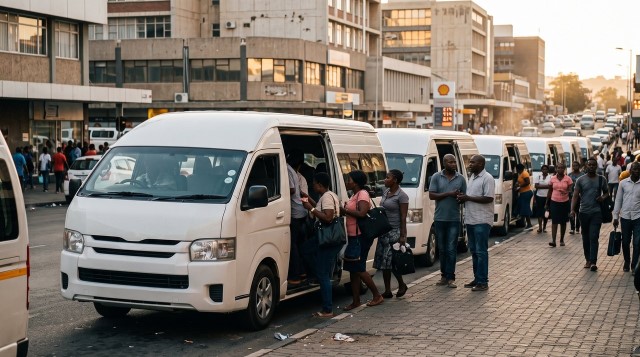
The May 2026 fuel double-hike — diesel up R5.27 per litre in South Africa from 6 May and N$4.63 per litre in Namibia from 8 May — is now flowing through to commuter fares across SADC. SANTACO has warned of a third taxi fare hike inside twelve months in South Africa, and Namibia's bus and taxi association Nabta has signalled an imminent corridor-fare review. Public transport operators that absorb the increase will be running below cost-of-service within four weeks.
PUBLIC TRANSPORT
8 May 2026 • 4 min read
Public transport operators are the first to feel the diesel curve and the last to be allowed to reprice. SADC's minibus taxi industry, intercity coach operators and BRT services collectively move tens of millions of passenger trips per week — and almost none of them have an automatic fare-adjustment mechanism. The May fuel hike will land as a margin shock first, then a fare hike second, with the political cost of the second falling on operators rather than government.
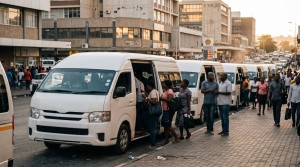
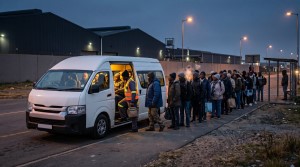
SANTACO confirmed on 7 May that the council is preparing for a third minibus taxi fare adjustment inside the past twelve months — the May 2026 hike following increases triggered by the April 2026 diesel shock and the late-2025 fuel surcharge cycle. With minibus taxis carrying approximately 68% of South Africa's commuter trips per the latest National Household Travel Survey, even a small fare adjustment compounds across millions of passengers per day. Most taxi operators run pre-2018 16-seater diesels with fuel cost roughly 38-45% of operating cost-per-kilometre — diesel pump prices in the R32-33/litre range push that ratio above 50% on routes where fares have not yet adjusted.
The political dimension is sharp. Provincial Departments of Roads and Transport, COGTA, and the South African Local Government Association are negotiating fare-adjustment guidance with SANTACO at provincial level, but the lag between national fuel announcements and provincial fare gazettes can be six to ten weeks. Operators that adjust unilaterally face informal-sector backlash; operators that wait absorb diesel cost they cannot recover.
Where commuter fares are heading: Fuel cost is now 50%+ of cost-per-km on minibus taxi routes; SADC commuter fares historically lag fuel hikes by 6-10 weeks; intercity coaches must lift fares 8-12% to neutralise the May 2026 diesel adjustment. (Sources: SANTACO 7 May 2026; industry analysis)
Namibia's Bus and Taxi Association (Nabta) is now in early consultation with the Ministry of Works and Transport over a fare review on Windhoek-Oshakati, Windhoek-Walvis Bay and Windhoek-Rundu corridors following the 8 May diesel adjustment. With diesel 50ppm at N$28.26/l in Walvis Bay, fuel cost on a 7-passenger long-distance taxi running the Windhoek-Oshakati corridor (about 700km return) has risen by approximately N$130-150 per round trip — a real squeeze on operators already running at wafer-thin margins.
Cross-border bus operators face a sharper version of the same problem. Intercape's Euro 6 fleet running Cape Town-Windhoek, Johannesburg-Maputo and Pretoria-Harare routes operates on dollar-equivalent diesel pricing across multiple jurisdictions, and the May fuel review reshapes route economics in real time. Industry analysts estimate intercity coach operators must lift fares 8-12% to neutralise the May 2026 diesel adjustment, with Botswana cross-border legs particularly exposed because pump diesel is cheaper there but the rand-pula exposure adds currency cost on every trip.
Across SADC, public transport sits at the intersection of three forces that work in opposite directions. Fuel cost is volatile and rises faster than wages. Fare adjustments require political and regulatory approval and lag fuel cycles by months. Passengers are typically lower-income households for whom fare elasticity is high — a 10% fare hike measurably reduces ridership in the first month before behaviour adapts. Operators end up absorbing structural fuel risk because the alternative is a public-policy confrontation that no party wins.
The longer-term implication is that SADC's commuter transport will continue migrating toward natural-gas, hybrid and battery-electric platforms — not because passengers demand them, but because operators need a fuel-cost line item that is decoupled from Brent crude. Cape Town's MyCiTi Volvo BZR battery-electric order, Tanzania's gas-powered Arusha BRT and Intercape's Euro 6 efficiency upgrades are all visible reactions to that calculus.
If you contract with public transport operators (school transport, staff shuttle, township distribution), expect rate-card requests within four weeks. If you compete with informal commuter routes for last-mile distribution, monitor fare adjustments — they materially shift the cost benchmark for last-mile freight too. And if you operate intercity coach lines into multiple SADC jurisdictions, run cross-border fuel-arbitrage refuelling now before the next pricing cycle resets the maths.
Stay connected with Southern Africa's freight and transport community.
Join 6,400+ logistics professionals across the SADC region.
Visit Laaimylorrie.com| About the Author | |

|
Andre Klynsmith Entrepreneur & Technology Enthusiast Andre's expertise spans technology, blockchain, transport, and logistics — with a passion for innovation and driving positive change across industries. |
| Source: The Citizen — How much more you'll pay for petrol and diesel from Wednesday View source › | 6 May 2026 |


Subscribe to our Newsletter and stay in the know with all the latest Industry News, Products and Trends covering the whole of the SADC region.
KS Blockchain T/A Laaimylorrie.com . All Rights Reserved.