Industry related headlines to keep you in the know.
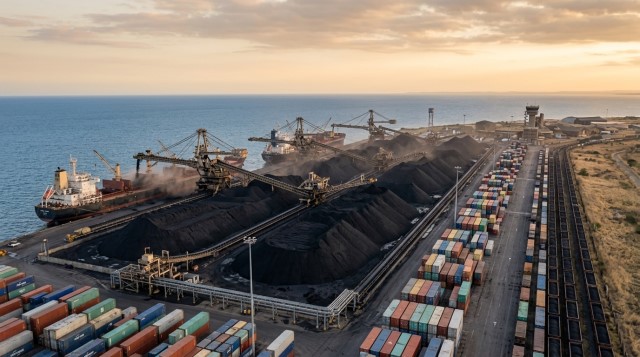
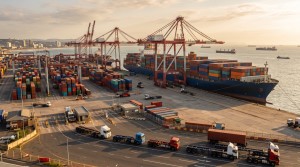
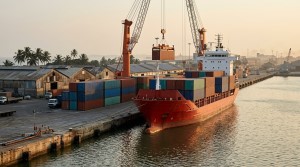
Richards Bay Coal Terminal (RBCT) is now targeting between 60 and 65 million tonnes of rail-borne coal in 2026, according to Transnet Freight Rail's coal business unit, after exports rose 11% in 2025 to 57.66 million tonnes from 52.08 million tonnes a year earlier — the strongest reading since the post-pandemic rail collapse began in 2022.
PORTS AND TERMINALS
3 May 2026 • 5 min read
A return to the 60-million-tonne floor at Richards Bay would not just lift Transnet's revenue line — it would re-anchor South Africa's role as Asia's marginal coal supplier and free up bulk-handling capacity that has been spilling onto road and feeder ports across the SADC region for the better part of three years.
RBCT's 2025 performance is significant because the terminal's nameplate capacity is around 91 million tonnes a year — meaning the corridor has spent recent years running at well under two-thirds of its potential. The 11% year-on-year recovery has been driven less by new equipment and more by Transnet's operational fixes on the coal export rail line: tighter slot management, faster turnaround on derailment-related repairs, and a sharp reduction in cable theft from 180 km of stolen cable in 2024 to roughly 59 km in 2025.
The 2026 target of 60–65 million tonnes assumes that improvement holds, that the new private train operating companies expected to access the network in the second half of the year add — rather than substitute for — Transnet's own train slots, and that the roughly 84.5% of South African seaborne coal heading to Asia (with India alone taking around 25 million tonnes in the latest reporting period) continues to absorb the volume.
Recovery in numbers: RBCT exports rose 11% in 2025 to 57.66 Mt; Transnet Freight Rail targets 60–65 Mt of rail-delivered coal in 2026; cable theft on the coal corridor fell from 180 km (2024) to 59 km (2025). (Source: Transnet Freight Rail / Mining Weekly, January–April 2026)
When Richards Bay underperforms, the consequences are felt well beyond KwaZulu-Natal. Mining producers across the region have spent the last few years splitting cargoes across longer truck-haul rotations to alternative outlets — Maputo, Walvis Bay, occasionally Beira — adding 30–50% to per-tonne logistics costs and tying up tractor-trailer combinations that should have been moving general freight on the North–South corridor. A return to a 60-million-tonne operating tempo at RBCT eases that pressure on the road network and frees road capacity for higher-margin general freight.
It also matters for the rest of South Africa's bulk and break-bulk port economy. Throughput discipline at Richards Bay — particularly on shunting, vessel turnaround and demurrage management — sets the operational benchmark for the dry bulk concessions now being tendered at the same port and at Ngqura, and underpins the credibility of Transnet Port Terminals' wider Reinvent for Growth programme as private capital negotiates terms.
Three risks stand out for the 2026 outlook. The first is global thermal coal pricing: Asian buyers, particularly in India and Pakistan, are price-sensitive, and any softening in benchmark pricing could erase the marginal economics that justify shipping South African coal across the Indian Ocean. The second is renewed cable theft and infrastructure sabotage on the corridor — a risk that does not stay solved. The third is execution at the terminal itself: vessel waiting times, stockpile management and the handoff between Transnet Freight Rail's slots and the terminal's berthing schedule still need to absorb the additional 2.5–7.5 Mt of incremental volume the target implies.
The deeper structural question is whether the recovery survives the eventual entry of private train operating companies onto the coal corridor. If the new operators add net capacity and replace truck volumes, RBCT's 60-million-tonne floor becomes a 70-million-tonne base by 2027–2028. If they simply substitute for Transnet, the corridor stays where it is — and SADC bulk producers will continue to plan around the same constraint.
Bulk producers and freight forwarders should treat the RBCT target as a planning input, not a guarantee — model two scenarios for 2026 (60 Mt and 50 Mt) and price road haulage contracts with both in mind. Road hauliers currently moving coal to alternative outlets should track Transnet's monthly coal-line performance and prepare to redeploy assets to higher-margin general freight if the rail recovery holds.
Stay connected with Southern Africa's freight and transport community.
Join 6,400+ logistics professionals across the SADC region.
Visit Laaimylorrie.com| About the Author | |

|
Andre Klynsmith Entrepreneur & Technology Enthusiast Andre's expertise spans technology, blockchain, transport, and logistics — with a passion for innovation and driving positive change across industries. |
| Source: Transnet Freight Rail / Mining Weekly View source › | 27 January 2026 |


Subscribe to our Newsletter and stay in the know with all the latest Industry News, Products and Trends covering the whole of the SADC region.
KS Blockchain T/A Laaimylorrie.com . All Rights Reserved.