Industry related headlines to keep you in the know.
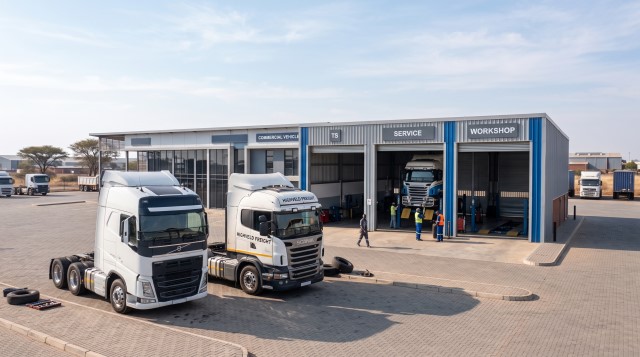
Truck manufacturers selling into Southern Africa are pivoting to subscription-based pricing models — bundling vehicle, maintenance, telematics and uptime into a single monthly fee — as a direct response to the fleet-renewal stall caused by April 2026's diesel shock, tightening credit, and tariff uncertainty across the SADC region.
Asset Management
30 April 2026 • 5 min read
Truck makers cannot sell trucks if operators cannot finance them. Drive-as-a-Service rewrites the question — bundling the vehicle, the workshop, the telematics and a guaranteed availability number into a single monthly cost. For SADC fleets staring at frozen replacement plans, the operating decision is now about cost-per-kilometre, not capital outlay.
For two decades the dominant SADC truck acquisition model has been hire-purchase or instalment sale, with maintenance and tyres handled separately and uptime risk carried entirely by the operator. Drive-as-a-Service (DaaS) packages — under names like Scania Flex, Volvo Truck-as-a-Service, MAN TruckCare, and Mercedes-Benz CharterWay — bundle the vehicle, scheduled and unscheduled maintenance, telematics, tyre management, breakdown response and a contracted availability percentage into one monthly fee, often with a fixed cost-per-kilometre component layered on top.
The contractual logic is straightforward: the OEM sells uptime, not steel. Penalties kick in when the manufacturer fails to deliver the contracted availability percentage. Operators get budget certainty, no balance-sheet asset, and predictable working capital — three things that matter even more in 2026 with diesel volatility and tariff-driven freight rate compression.
Market signal: South Africa's medium and heavy commercial vehicle financiers are reporting double-digit growth in operating-lease and full-service contract take-up in 2026, against a softer outright-purchase market. (Source: industry estimates from leading SA fleet financiers, 2026)
Three structural pressures have pushed subscription pricing from a marginal product to a mainstream conversation. First, financing is harder. South African banks have tightened lending criteria for single-truck owner-operators after a wave of defaults during the 2025/26 diesel cycle, and traditional balloon-payment hire-purchase deals are no longer being approved as freely. Second, AARTO activates in July 2026 in South Africa and operators need newer vehicles, integrated telematics, and disciplined driver-behaviour data to manage demerit risk. Third, the rise of Chinese and Indian OEMs — FAW, Sinotruk, Shacman, Tata, Ashok Leyland — has forced European brands to compete on total cost of ownership rather than purchase price.
The European OEMs have responded by leaning into DaaS as a differentiation play. Their parts networks across Johannesburg, Cape Town, Walvis Bay, Lusaka and Maputo are mature enough to back uptime guarantees that newer entrants struggle to match. Chinese OEMs are now developing their own bundled offers — CFAO Mobility's Sinotruk service plans and FAW's flagship-warranty packages signal where the market is moving.
DaaS is not automatically the cheapest option. The numbers that decide whether a subscription beats outright purchase are kilometres per year, route profile, residual value assumptions, and the operator's own workshop overhead. Long-haul cross-border fleets running 180,000–220,000 km a year often save under DaaS because they hit OEM service network density. Short-haul urban fleets running below 80,000 km a year may pay a premium for capacity they do not consume.
The contractual fine print is where deals are won or lost. Operators should pressure-test exclusions for off-route operations, accident damage coverage, AdBlue and consumables treatment, the swap-out vehicle clause when a unit is in workshop for more than 24 hours, and the early-termination cost. Cross-border operators in particular should verify that the OEM service network covers their actual route — a gap in coverage between Lusaka and Lubumbashi or between Walvis Bay and Katima Mulilo can convert a subscription saving into an unbudgeted breakdown bill.
Drive-as-a-Service is the most credible response yet to the fleet-renewal stall. For operators with consistent route profiles and high annual kilometres, it can deliver budget certainty in a year of diesel and tariff turbulence. The decision should be made on cost-per-kilometre and route-network coverage — not just on the headline monthly figure.
Stay connected with Southern Africa's freight and transport community.
Join 6,400+ logistics professionals across the SADC region.
Visit Laaimylorrie.com| About the Author | |

|
Andre Klynsmith Entrepreneur & Technology Enthusiast Andre's expertise spans technology, blockchain, transport, and logistics -- with a passion for innovation and driving positive change across industries. |
| Source: Scania Finance South Africa — Truck-as-a-Service / Operating Lease Programmes View source › | 30 April 2026 |


Subscribe to our Newsletter and stay in the know with all the latest Industry News, Products and Trends covering the whole of the SADC region.
KS Blockchain T/A Laaimylorrie.com . All Rights Reserved.